
When most people think of Vikings, they imagine fierce warriors raiding coastal villages, longships cutting through stormy seas, and sagas filled with battles and conquest. Yet the story of the Norsemen is far more complex. They were not just marauders—they were also traders, settlers, and builders. One of their most overlooked legacies lies in architecture. Far from being primitive, the Viking contribution to medieval architecture shaped building styles across northern Europe and left a lasting imprint on medieval design.
The Viking World: Builders as Well as Raiders
The Vikings emerged from Scandinavia in the late 8th century and spread across Europe through raiding, trading, and settlement. But wherever they went, they brought with them not only weapons but also skills in woodworking, shipbuilding, and construction. These skills made them invaluable in shaping the cultural and architectural landscapes of the regions they influenced.
To dismiss the Norse as “barbarians” ignores their craftsmanship. Archaeological evidence reveals that Viking halls, stave churches, and urban planning principles became influential models in later European architecture. Understanding how Vikings shaped medieval architecture requires us to look beyond stereotypes and explore their role as creators.
Norse Architecture and Medieval Design
At the heart of Norse architecture and medieval design was wood. Scandinavia lacked the abundant stone quarries of southern Europe, so Vikings became masters of timber construction. Their longhouses, with curved roofs supported by massive beams, reflected both engineering skill and cultural symbolism.
These design elements carried over into medieval architecture in several ways:
-
Great Halls and Communal Spaces
Viking longhouses were the social centers of their communities, combining living quarters with feasting halls. The medieval great hall, a staple of castles and manor houses, owes much to this Norse model of blending practicality with ceremonial space. -
Stave Churches
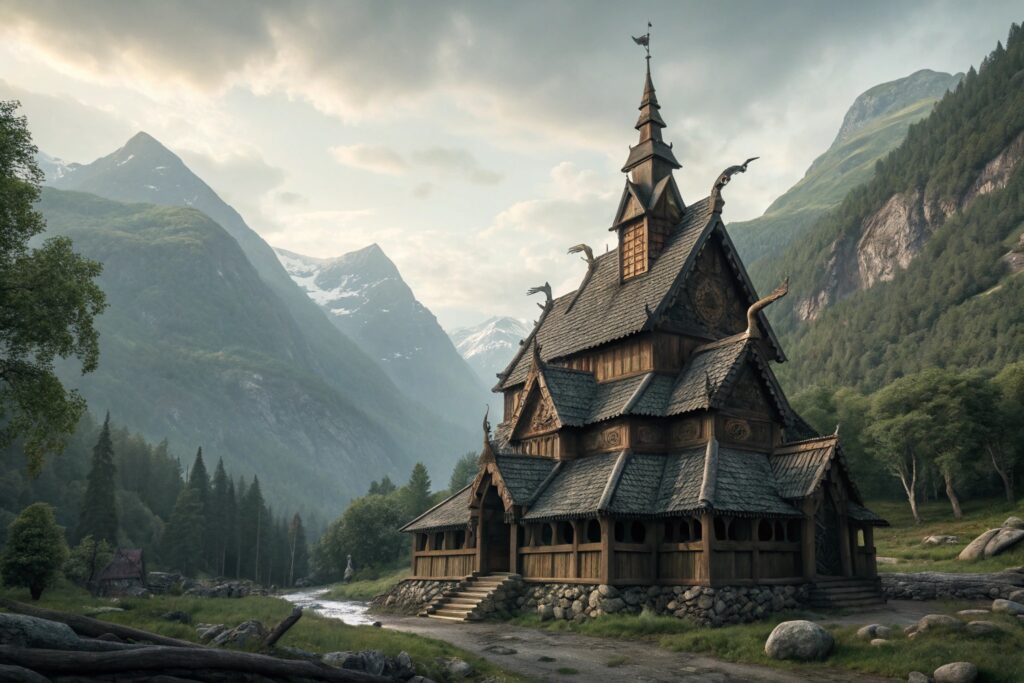
Among the most remarkable contributions are stave churches in Norway. Built in the 12th and 13th centuries, they showcase advanced woodworking techniques and elaborate carvings of dragons, vines, and geometric patterns. These structures bridged pagan motifs with Christian design, influencing ecclesiastical architecture across northern Europe. -
Roofing Techniques
The steep, overlapping roofs of stave churches and longhouses influenced northern Gothic architecture, where tall wooden roofs became both practical for heavy snow and symbolically imposing.
Thus, the Viking influence on European building styles reached far beyond Scandinavia, blending pagan traditions with Christian ideals.
Urban Planning and Settlements
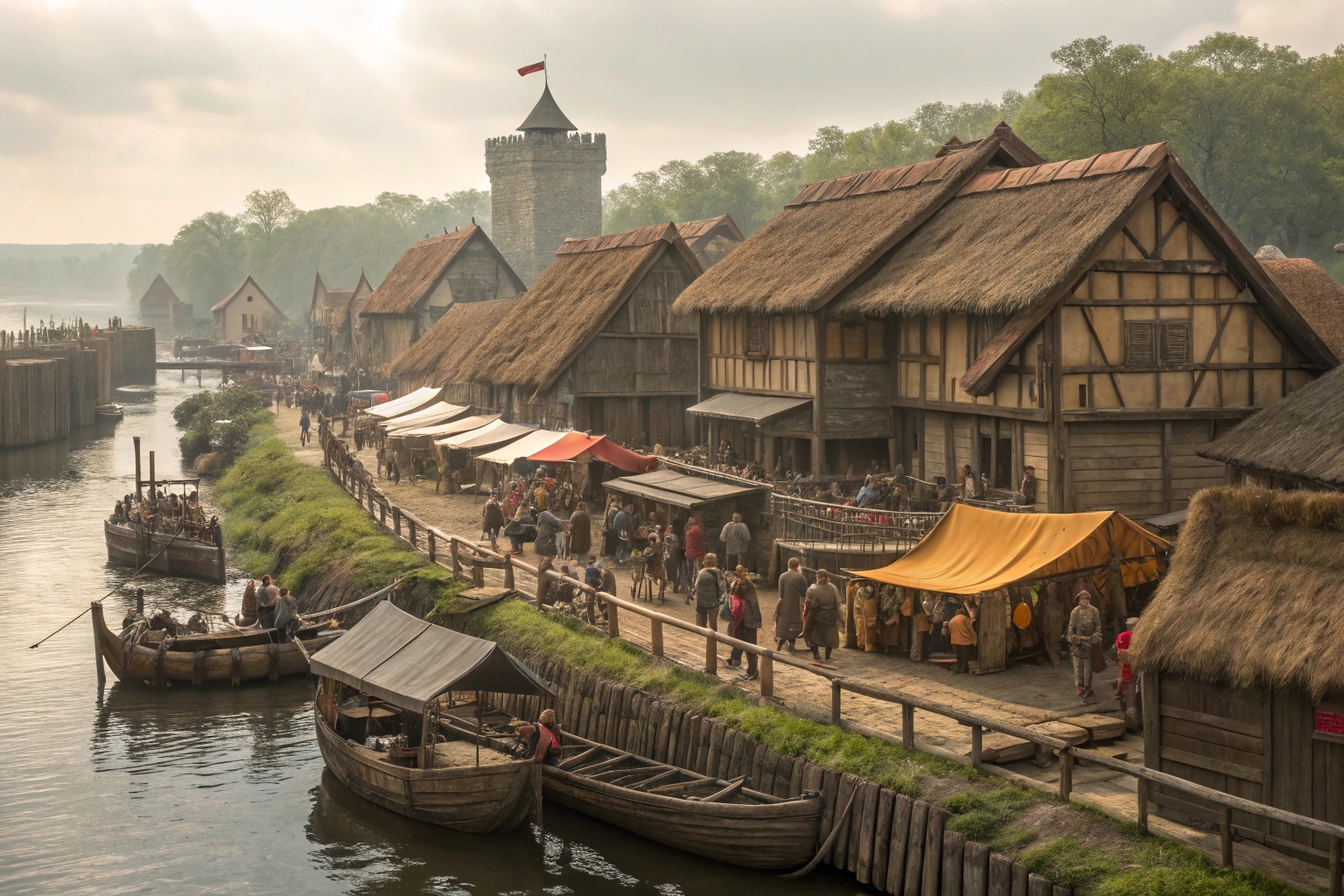
Another overlooked aspect of the Viking legacy in medieval Europe is their role in developing towns. As settlers, Vikings did not simply build temporary camps; they established thriving communities.
-
Dublin, York, and Kiev all began as Viking trading hubs. Their layouts reveal streets aligned with waterways, fortified enclosures, and marketplaces that later medieval towns inherited.
-
The use of timber palisades and earthworks for defense prefigured the more permanent stone walls of later medieval fortifications.
-
Viking craftsmanship in bridges and wharves improved river trade infrastructure, encouraging urban growth in regions from England to Russia.
In this way, Viking settlements provided a foundation for medieval urbanism and commerce.
Symbolism and Carving Traditions
Architecture is not only about function—it is about meaning. Viking builders infused their work with symbolic carvings and motifs that blended mythology with structure.
-
Dragon Heads and Beasts: These were carved on roof gables and beams, echoing ship prows. They symbolized protection and power.
-
Interlace Patterns: Complex knotwork and spirals decorated doors and structural posts, a style that later merged with Romanesque art.
-
Runic Inscriptions: Some building elements were inscribed with runes, embedding spiritual and cultural significance into everyday architecture.
When Christianity spread through Scandinavia, these motifs did not vanish. Instead, they were adapted, becoming part of church decoration and influencing medieval stone carving across northern Europe.
Viking Technology and Craftsmanship
The Vikings were also innovators in construction techniques:
-
Post-and-Beam Framework: Their use of vertical wooden posts supported by horizontal beams influenced timber-framed houses that became common across medieval Europe.
-
Joinery Without Nails: Viking builders perfected complex joinery techniques that made buildings sturdy and flexible—skills later mirrored in medieval carpentry.
-
Shipbuilding Influence: The curved lines and overlapping planks of Viking ships inspired similar engineering solutions in roofing and structural supports.
By transmitting these skills, Vikings shaped the way northern Europe approached building in wood—a resource that remained central well into the Middle Ages.
How Vikings Shaped Medieval Architecture Beyond Scandinavia
The Viking influence on European building styles extended well beyond their homelands. As they settled in Normandy, England, Ireland, and Eastern Europe, they blended their techniques with local traditions.
-
Normandy: Descendants of Vikings, the Normans, became major builders of Romanesque cathedrals and castles. Their architectural dominance traces back to Viking adaptability.
-
England: Anglo-Saxon and Viking traditions merged, producing timber halls and early stone churches that anticipated medieval Gothic styles.
-
Russia and the East: The Varangians (Vikings in Eastern Europe) introduced fortified wooden towns and river-based trade hubs, influencing Slavic building practices.
Thus, the Viking contribution to medieval architecture was not isolated but part of a cross-cultural exchange that shaped Europe’s architectural identity.
The Viking Legacy in Medieval Europe
By the late Middle Ages, many of the Viking-era structures had been replaced by stone castles, Gothic cathedrals, and fortified cities. Yet the Viking legacy in medieval Europe lived on in subtle but powerful ways:
-
The tradition of communal halls evolved into manorial estates and castles.
-
Wooden stave churches influenced church architecture far beyond Scandinavia.
-
Decorative motifs from Norse art appeared in manuscripts, carvings, and stonework.
-
Settlement planning laid the groundwork for major European cities.
Today, surviving stave churches in Norway stand as direct links to this legacy, while excavations in Dublin and York remind us of Viking foundations beneath modern streets.
Not Just Barbarians
To call the Vikings mere barbarians is to ignore their role as craftsmen, settlers, and innovators. The Norse architecture and medieval design they developed contributed to Europe’s cultural richness and architectural diversity.
By studying how Vikings shaped medieval architecture, we uncover a story of adaptation, resilience, and artistry. They were not only destroyers but also builders—men who left an indelible mark on medieval Europe.
Their architectural contributions, from stave churches to urban planning, remind us that history is rarely one-dimensional. The Vikings, remembered for their raids, should also be remembered for the halls, churches, and towns that helped shape the Middle Ages.
