
More Than a Thunder God
When we hear the name Thor, many immediately think of thunder, lightning, or his mighty hammer Mjölnir. But in Norse mythology, Thor was far more than a storm-bringer. He was Thor protector of gods and men, a defender of Asgard and Midgard, a deity deeply tied to ordinary people, and a cultural icon who embodied strength, resilience, and protection.
This article explores Thor’s role not just as a warrior but as a guardian—his battles against giants, his relationship with humankind, his role in the Viking Age, and why his protection mattered to both gods and mortals.
Thor in Norse Mythology: The Guardian of Order
Son of Odin, Champion of Midgard
Thor, son of Odin and the earth goddess Jord, was known as the Norse god of thunder, storms, and strength. Yet above all, he was the protector of Asgard (the realm of the gods) and Midgard (the world of humans).
Where Odin represented wisdom and magic, Thor represented action and defense. He was the one who faced down chaos whenever it threatened.
Thor Protector of Gods and Men
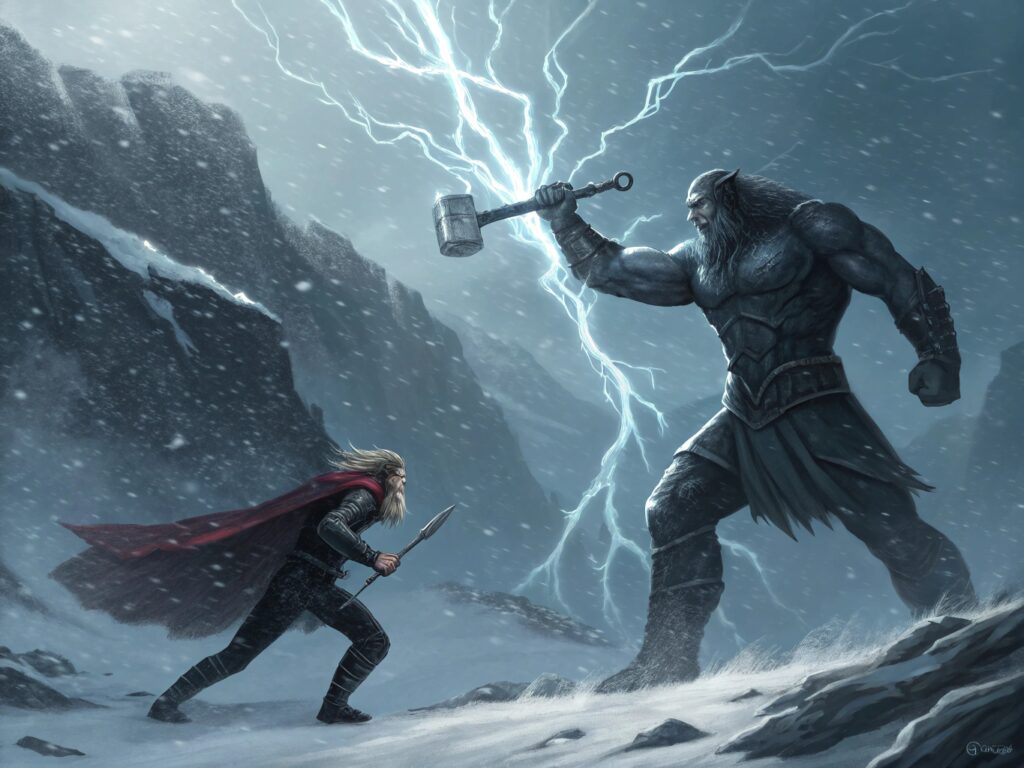
The myths consistently show Thor acting not for personal glory, but to shield others. When giants (Jotnar) threatened the gods or mortals, it was Thor who stood between them. His battles with monstrous forces symbolized the eternal struggle between order and chaos.
Thor and Mjölnir: More Than a Weapon
Mjölnir, Thor’s hammer, is the most iconic symbol of Norse mythology. Forged by dwarves, it could crush mountains and return to Thor’s hand after each strike. Yet it was more than a weapon—it was a tool of protection.
-
Thor used Mjölnir to defend Asgard from giants.
-
He used it to bless marriages and births, symbolizing protection for the family.
-
Farmers believed in its power to ensure fertility of the land.
Thus, the hammer was not simply destructive; it was a sacred shield for both gods and men.
Battles Against Giants: Thor as the Eternal Defender
Thor vs. Jormungandr
One of Thor’s greatest enemies was Jormungandr, the world-serpent. Their destined battle at Ragnarok reflects Thor’s ultimate role as defender. Even knowing he would die from the serpent’s venom, Thor faced Jormungandr—showing his willingness to sacrifice for the safety of gods and men.
Thor and the Everyday Threats
Beyond cosmic monsters, Thor also fought frost giants, trolls, and forces of destruction that constantly threatened human settlements. Each story reinforced the idea of Thor protector of gods and men, acting tirelessly to guard against chaos.
Thor’s Connection to Humanity
God of the Common People
While Odin was worshiped by kings and poets, Thor belonged to farmers, warriors, and ordinary folk. In Viking society, Thor’s hammer amulets were worn as protective charms. These Mjölnir pendants have been found across Scandinavia, symbolizing his watch over daily life.
For the Norse, Thor was not distant. He was the guardian of Midgard, the one they called upon for protection during storms, battles, and hardships.
Rituals and Worship
Thor’s hammer was invoked in ceremonies:
-
Blessing weddings for fertility and protection.
-
Consecrating homes and farmland.
-
Protecting travelers against dangers.
In every ritual, Thor’s role as protector of men was clear.
Thor as Cultural Symbol
Protector of Law and Order
Thor was more than a warrior; he embodied stability. His constant defense against giants symbolized the preservation of cosmic order. Without him, Asgard and Midgard would fall to chaos.
Thor in Viking Identity
For Vikings, Thor protector of gods and men reflected values of strength, honor, and loyalty. In a world of constant threat—raids, harsh winters, and uncertainty—Thor’s example provided comfort.
He was not perfect. He was quick-tempered, sometimes mocked for his simplicity. Yet his flaws made him relatable, and his unwavering defense made him beloved.
Thor and Midgard: Shielding the Human World
The Bridge Between Worlds
Thor’s role was unique because he protected both Asgard and Midgard. Few gods had such a close relationship with humanity. He was their champion, ensuring that giants did not overrun their world.
Everyday Guardian
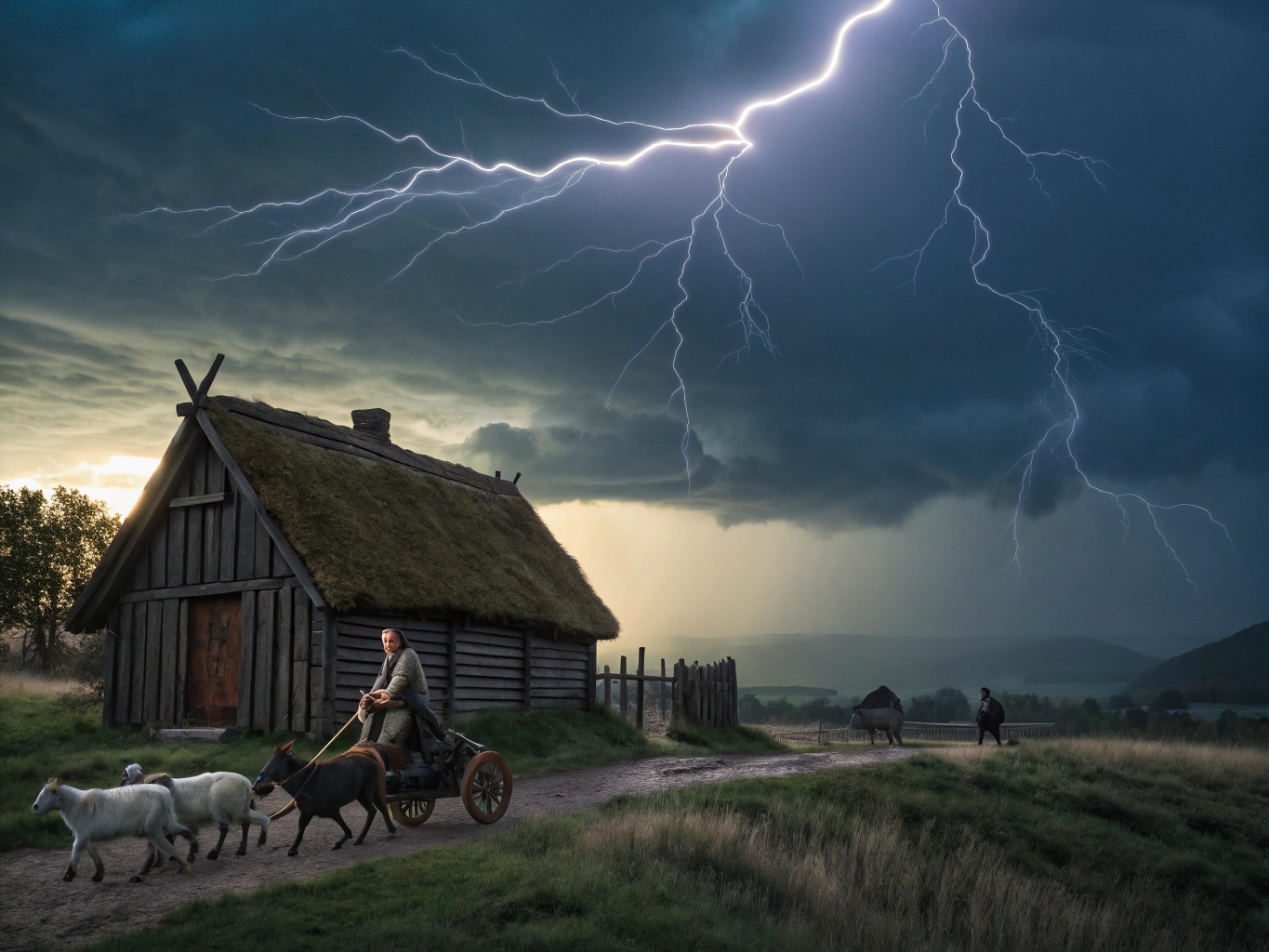
For common Norse people, Thor’s presence was felt in thunderstorms, believed to be the god riding across the sky in his chariot pulled by goats. Every rumble of thunder was a reminder of Thor protecting gods and men from unseen forces.
Thor at Ragnarok: The Ultimate Sacrifice
At the end of time, Ragnarok foretold the destruction of the world. Thor’s greatest moment as protector of gods and men came when he faced Jormungandr.
-
He killed the serpent with Mjölnir.
-
But he walked only nine steps before collapsing from its venom.
Thor’s death was not defeat. It was the ultimate act of sacrifice, proving that his role as protector lasted until his final breath. In Norse belief, this was the highest honor.
Thor in the Eddas: Voice of Protection
The Poetic Edda and Prose Edda describe Thor’s adventures with humor and awe. He was sometimes portrayed as simple-minded compared to Odin, but he was never cowardly. His strength and reliability made him the shield of Asgard.
Every myth, from fishing for Jormungandr to smashing giants, reinforced his role as Thor protector of gods and men.
Thor’s Enduring Legacy
From Vikings to Today
Even after the Viking Age, Thor remained a cultural figure. Christian Scandinavia retained his imagery, and in modern times, he has re-emerged in literature, film, and popular imagination.
Yet behind the Marvel superhero stands the original Thor of Norse mythology: a god of storms, a defender, and the eternal protector of gods and men.
Symbol of Strength and Loyalty
In modern culture, Thor symbolizes the timeless truth that strength is not only for oneself but for others. His myths remind us that real power lies in protection, sacrifice, and loyalty.
Conclusion: Why Thor Still Matters
Thor was not just the hammer-wielder of Asgard—he was the guardian of humanity, the god who ensured order survived against chaos. His legacy as Thor protector of gods and men reflects universal values: courage, sacrifice, and the duty to shield others.
For the Vikings, calling on Thor meant calling for safety, stability, and endurance. For us today, his story continues to inspire: true strength is measured not by destruction, but by protection.
