
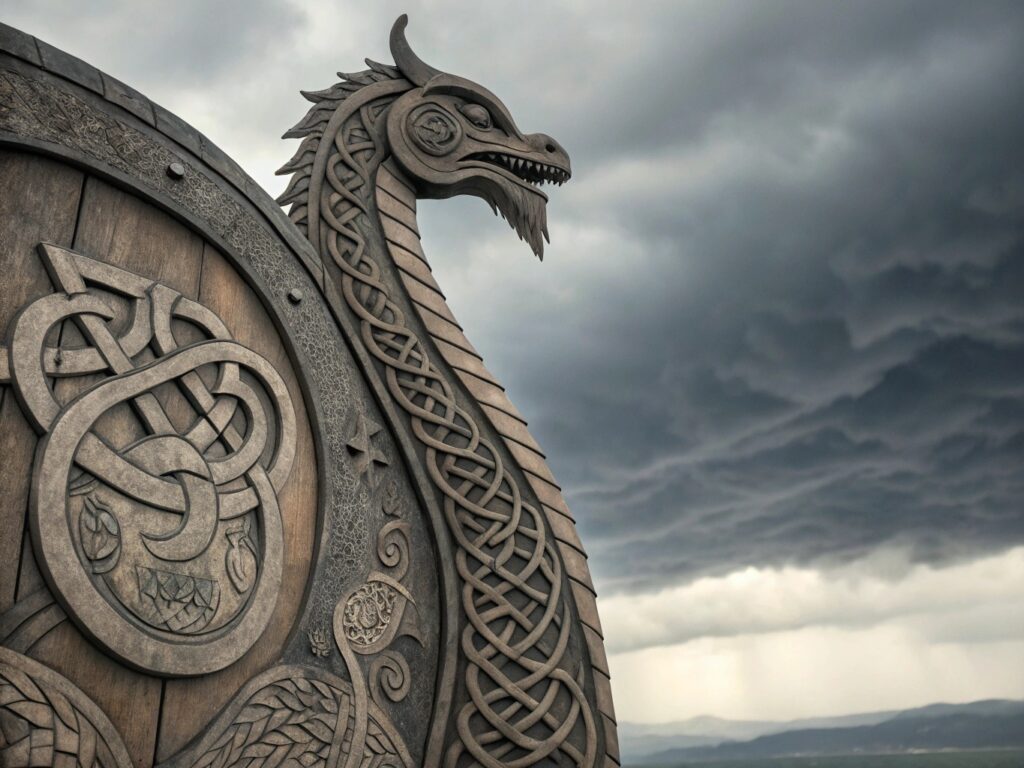
In the windswept sagas and stone-carved legends of the Vikings, dragons slither between worlds, wolves chase the sun, and serpents circle the earth. These creatures were not mere monsters to be slain—they were symbols of cosmic truths, human fears, divine trials, and ancestral power. When Vikings dreamed of dragons, they dreamed of fate, fire, and the forces that shaped their world.
This article explores the mythical beasts of Norse mythology, focusing on their symbolic meaning within Viking belief systems, warrior culture, and spiritual cosmology—where every creature, from the world-serpent to the stallion of night, told a deeper story about the Norse view of life, death, and the end of all things.
Dragons in Norse Myth: Symbols of Greed, Wisdom, and Doom
Fáfnir: The Greedy Dragon
Arguably the most iconic dragon in Norse lore, Fáfnir was once a dwarf transformed into a dragon by his insatiable greed. After murdering his father for a cursed hoard of gold, Fáfnir turned monstrous—hoarding his treasure, breathing poison, and sleeping on his ill-gotten gains.
When the hero Sigurd (Siegfried in Germanic myth) kills Fáfnir, he tastes the dragon’s blood and gains the ability to understand birds—awakening him to hidden knowledge and betrayal.
🔍 Symbolism of Fáfnir:
-
Greed and corruption of the soul;
-
Transformation through moral decay;
-
Guardianship of cursed wisdom;
-
The high cost of knowledge and treasure.
Fáfnir is not just a beast to be slain; he is a mirror of human avarice, a warning about the corruptive power of wealth, and a gatekeeper of fateful knowledge.
Jörmungandr: The World Serpent
Few creatures loom larger in Norse cosmology than Jörmungandr, the Midgard Serpent, who encircles the entire world, biting his own tail. This massive sea serpent is one of Loki’s monstrous children, and his very existence is bound to the fate of the gods.
At Ragnarök, Jörmungandr will rise from the sea, spewing poison, and clash with Thor in a final, fatal battle. Though the thunder god will slay him, Thor will take only nine steps before succumbing to the serpent’s venom.
🔍 Symbolism of Jörmungandr:
-
Cycles and eternity (the ouroboros);
-
Chaos lurking beneath the surface;
-
Balance between destruction and protection;
-
Doom that cannot be avoided.
Jörmungandr represents the inescapable nature of fate. The Vikings did not fear the serpent so much as respected his role in the grand cycle—a force of destruction, yes, but one that brings about necessary renewal.
Wolves, Stallions, and Beasts of the End Times
Fenrir: The Bound Wolf
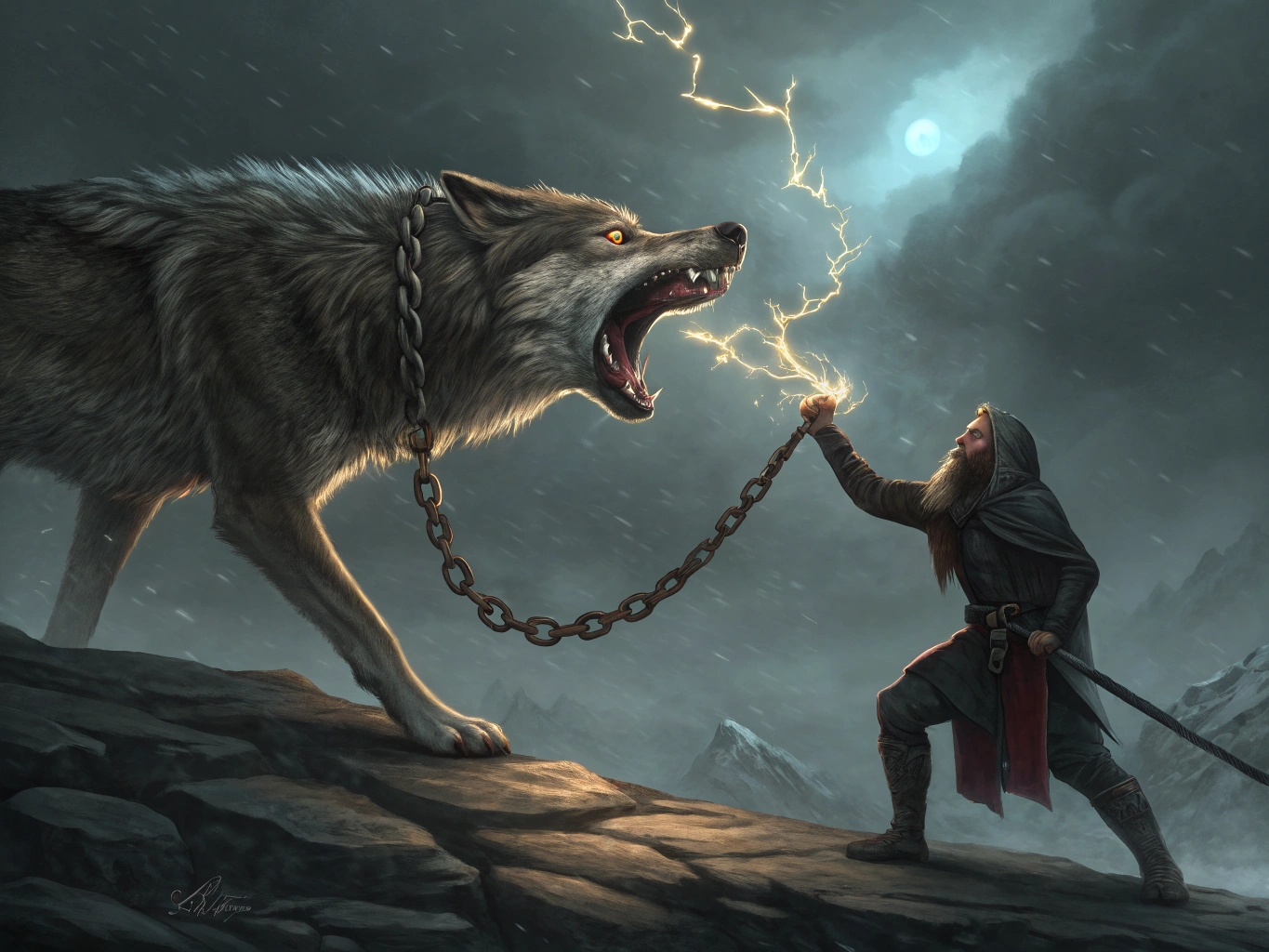
Another of Loki’s offspring, Fenrir is the wolf destined to devour Odin, the Allfather, at Ragnarök. Knowing this, the gods tried to bind him with chains—but he broke each one until they finally tricked him with a magical ribbon forged by dwarves, called Gleipnir.
Fenrir agreed to be bound only if one of the gods placed their hand in his mouth as a pledge. Tyr, the god of war and justice, volunteered—losing his hand in the process.
🔍 Symbolism of Fenrir:
-
Unchecked power and wild nature;
-
Betrayal and sacrifice;
-
Prophecy and the tension between control and freedom.
Fenrir’s story is not one of simple evil. He is a creature wronged, mistrusted, and ultimately fated to destroy—but only after enduring centuries of unjust captivity.
Sköll and Hati: The Celestial Wolves
Every day and night, two cosmic wolves—Sköll and Hati—chase the sun and moon across the sky. At Ragnarök, they will finally catch and devour them, plunging the world into darkness.
These wolves represent the relentless passage of time, an ever-present reminder that even light and warmth are destined to die.
🔍 Symbolism of Sköll and Hati:
-
The inevitability of decay;
-
The cyclical nature of time;
-
Pursuit without rest;
-
Celestial order fated to collapse.
The Vikings saw the cosmos as a dynamic battlefield—where even the heavens were not eternal, but hunted by forces of darkness.
Sleipnir: Odin’s Eight-Legged Steed
Not all Norse beasts were terrifying. Some were majestic, mysterious, and divine—none more so than Sleipnir, the eight-legged stallion ridden by Odin himself.
Born of Loki (yes, Loki bore a horse), Sleipnir could gallop across land, sea, and even into the underworld. He was a psychopomp—a spiritual guide—and a symbol of Odin’s shamanic power and cosmic travel.
🔍 Symbolism of Sleipnir:
-
Transcendence and spiritual movement;
-
Duality (eight legs = four pairs = boundary-crossing);
-
Communication between worlds;
-
Balance between the wild and the divine.
To dream of Sleipnir was to dream of crossing thresholds—between life and death, mortal and divine, known and unknown.
Beasts in Viking Art: More Than Decoration
Viking longships, weapon hilts, and rune stones were often carved with serpents, dragons, wolves, and knotwork beasts. These weren’t mere embellishments—they were spiritual symbols, protective charms, and ancestral emblems.
For example:
-
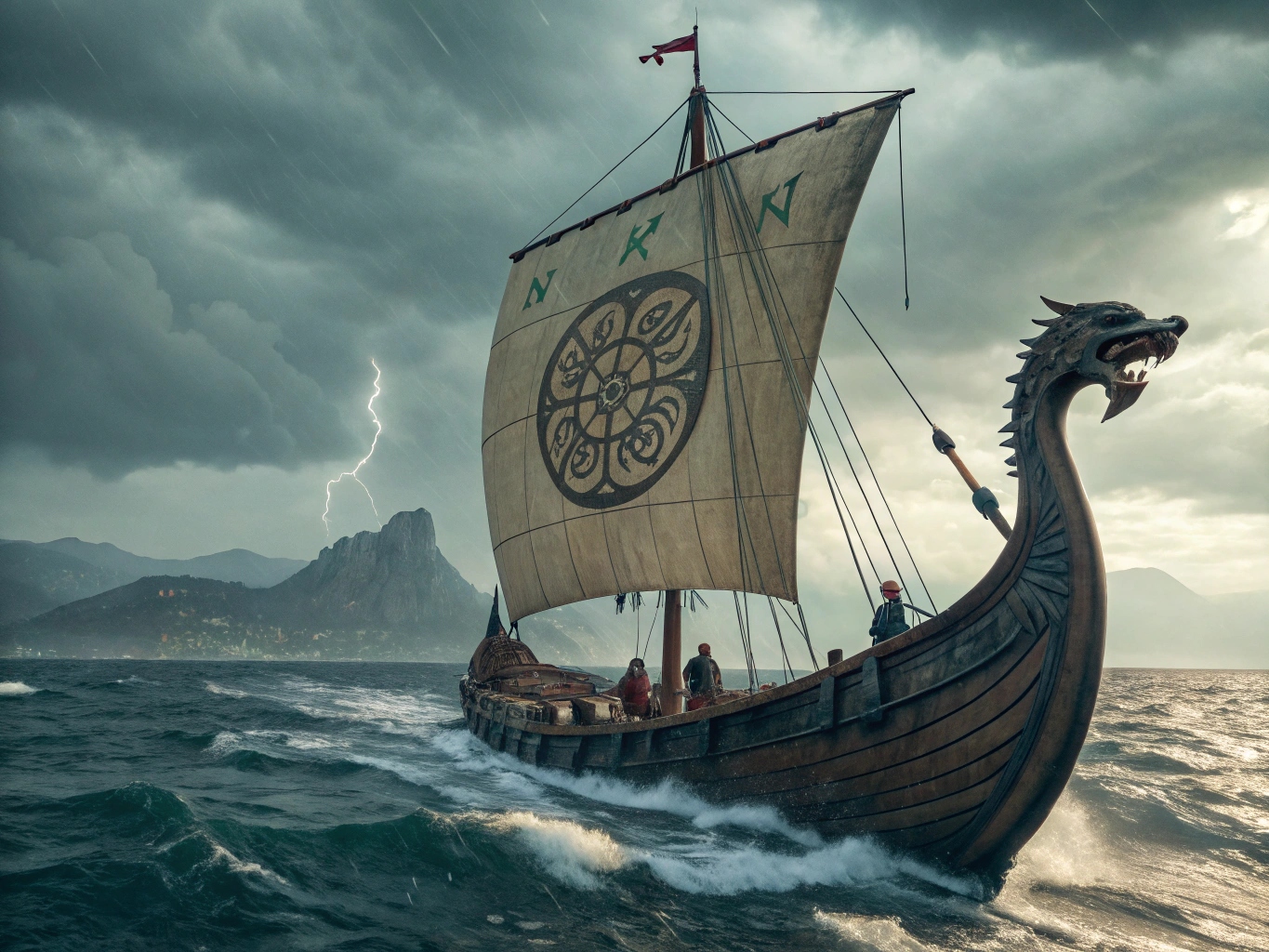
The dragon-headed prow of a ship was meant to ward off sea monsters and evil spirits.
-
Serpentine patterns on shields and armor signified power, eternity, and divine guardianship.
-
Beast-head brooches and pendants may have invoked totemic animals or protective deities.
To wear or carve a beast was to claim a fragment of its essence—a fusion of the spiritual and symbolic, a badge of identity and power.
Dreams and Visions: How Vikings Saw Mythic Beasts
While we lack direct Norse treatises on dreams, the sagas and Eddas are rich with vision-like moments where heroes encounter beasts in symbolic or prophetic ways.
-
A warrior dreams of a serpent coiled around his hall, only to later face betrayal in his own household.
-
A woman sees a wolf tearing a ring apart, foretelling her husband’s death in a blood feud.
-
Kings interpret the appearance of a winged serpent as a sign of coming war.
These dream-beasts functioned like omens, fusing the psychological, the mystical, and the mythic. To see a beast in a dream was to receive a message from the gods—or from fate itself.
The Dual Nature of Norse Beasts
A striking feature of Norse beast mythology is that these creatures are rarely purely evil or purely good. They are ambiguous, chaotic, divine-adjacent—symbols of forces beyond human control.
| Beast | Positive Aspect | Negative Aspect |
|---|---|---|
| Fáfnir | Hidden wisdom | Greed, decay |
| Jörmungandr | Cosmic balance | Destruction |
| Fenrir | Strength, vengeance | Chaos, doom |
| Sleipnir | Spiritual travel | Unnatural birth |
| Sköll & Hati | Cosmic rhythm | Devourers of light |
This duality reflects the Viking worldview—a cosmos in tension, where even the gods are mortal, and the greatest forces are not resisted but respected.
Conclusion: What Vikings Saw in Dragons and Beasts
To the modern eye, dragons and mythic beasts are fantasy. But to the Vikings, they were symbols of eternal truths—woven into the sky, the sea, the soul.
Dragons represented not just danger, but transformation. Wolves were not just monsters, but mirrors of strength and betrayal. Serpents were both cosmic chains and cosmic destroyers.
In their art, their stories, and their dreams, the Norse embraced these beasts as reflections of the forces that ruled their lives—honor, death, time, and fate.
So when Vikings dreamed of dragons, they didn’t just dream of monsters. They dreamed of everything that lay beyond the edge of the map—and the courage to face it.
