
For the Vikings, survival depended on more than strength at sea or courage in battle—it was rooted in the kinship system that bound families together. Unlike modern society, where the individual often stands apart, Viking kinship determined identity, duty, and destiny. Every Viking belonged to a web of relationships that dictated loyalty, inheritance, and honor. These family ties shaped politics, law, and even warfare, creating a society where blood and bond were inseparable.
This article explores how Viking family structure worked, the role of clans and households, the importance of loyalty and honor, and how kinship influenced everything from blood feuds to marriage alliances.
The Viking Family Structure
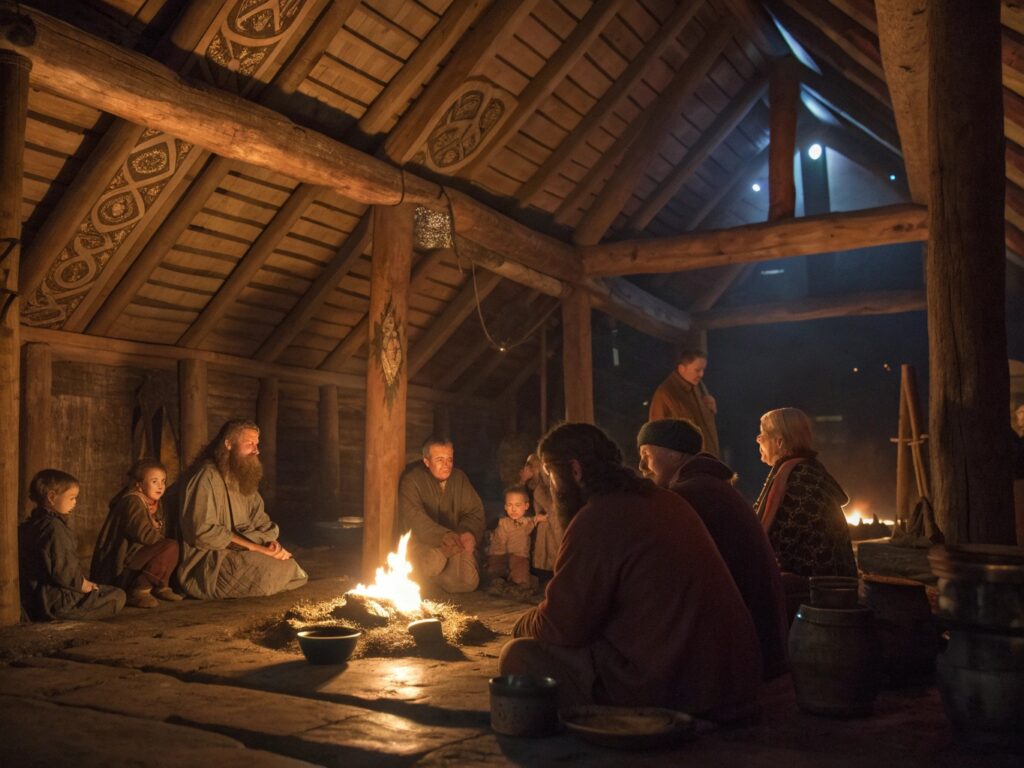
The Viking family was more than parents and children—it extended to grandparents, uncles, aunts, cousins, and foster kin. At the center stood the longhouse, a communal dwelling where generations lived under one roof.
Men held authority as heads of households, yet women also carried significant responsibilities. A Viking woman managed the home, supervised property, and played a vital role in maintaining alliances. Household members included not only blood relatives but also servants, slaves, and foster children.
This Viking family structure created a tightly knit unit where loyalty to kin outweighed loyalty to the state or king. In times of conflict, family was the first line of defense and the ultimate source of identity.
Clans and the Norse Kinship System
Beyond the household, Vikings were organized into clans, extended networks of related families bound by both blood and marriage. This Norse clan system ensured that no individual stood alone. Kinship determined who would stand by you in court, who would fight beside you in battle, and who would avenge you in death.
The sagas are filled with examples of men invoking their kin to support their claims. Even the most powerful chieftains relied on their extended families to secure loyalty. To betray one’s kin was unthinkable, and to fail in defending them meant disgrace.
Blood Feuds and Family Honor
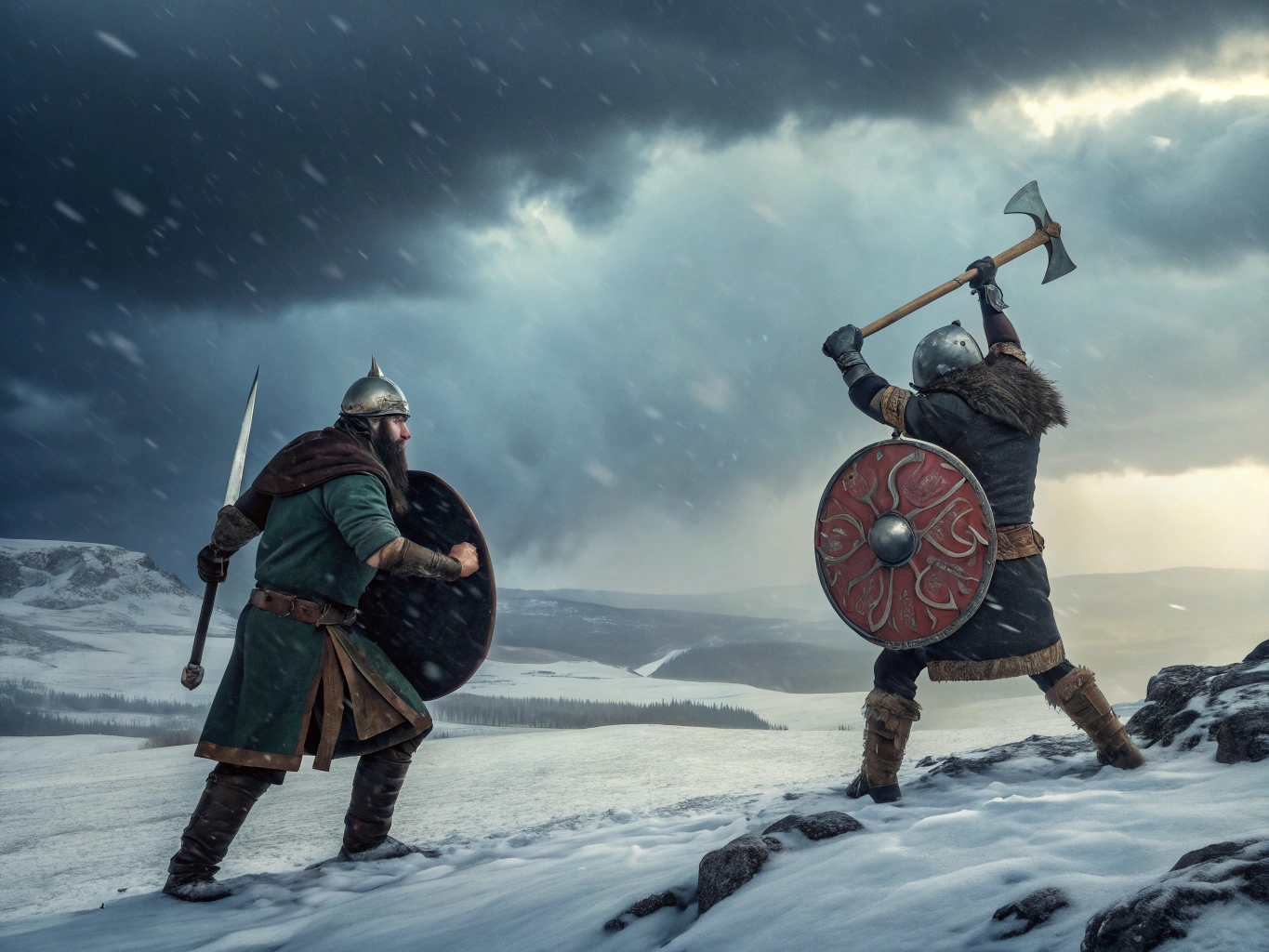
One of the most striking aspects of kinship in Viking society was its connection to blood feuds. When a family member was killed, it became the duty of the kin to seek vengeance or demand compensation. These feuds could last for generations, consuming entire clans in cycles of violence.
Yet, these conflicts were not mere chaos. They were bound by a sense of Viking honor and loyalty. To leave a relative unavenged was to invite shame. Legal mechanisms, such as wergild (man-price), allowed families to accept compensation in silver or goods instead of blood. But the decision always rested with the kin group.
Honor, therefore, was not individual but collective. The actions of one family member affected the reputation of the entire clan. In the Viking worldview, family honor was as precious as life itself.
Marriage Alliances: Bonds Beyond Blood
While blood connected kin, marriage extended those connections outward. Viking marriage alliances were strategic, cementing peace, creating trade networks, and strengthening political power. A woman’s dowry—land, livestock, jewelry, or servants—was not just her contribution but also a symbol of her family’s strength.
Through marriage, families secured allies and reduced the risk of feuds. In many cases, daughters were given in marriage to neighboring chieftains as part of negotiated truces. These unions were less about romance and more about weaving stronger social fabric.
Thus, Viking kinship was not static; it constantly expanded through carefully chosen alliances.
Inheritance and Viking Law
The Viking inheritance laws further reinforced the power of kinship. Property and wealth were passed down within families, ensuring that land and goods remained within the clan. Sons usually inherited their father’s land, while daughters received movable wealth such as jewelry, clothing, or livestock.
Remarkably, women in Viking society had legal rights to inherit property, a freedom not found in many other medieval cultures. Widows could manage estates, and daughters could hold claims in the absence of brothers. This ensured that the Viking family ties remained economically strong across generations.
Fosterage: Expanding Family Bonds
A unique feature of Norse society and families was the practice of fosterage. Children were often sent to live with another household, usually allies or close friends of the family. This created bonds of loyalty that went beyond blood.
Fosterage strengthened alliances between families and gave children broader opportunities. A boy might learn skills from a warrior foster-father, while a girl might gain experience in managing households. Foster parents treated foster children with the same care as their own, and foster-siblings often became lifelong allies.
This practice shows how Viking kinship extended beyond biology, shaping networks of trust and obligation.
Kinship and Viking Justice
Law in Viking society was deeply intertwined with family structure. Legal disputes were often settled not by individuals but by their families. If one member committed a crime, the kin group bore responsibility for paying fines or facing vengeance.
This system ensured that every person’s actions reflected on their Norse clan system. Even legal assemblies, known as Things, were places where kinship determined influence. A person’s voice carried more weight if supported by a powerful family network.
Thus, Viking legal culture was built not on individual rights but on family responsibilities.
The Saga Legacy: Kinship in Literature
The importance of kinship is vividly preserved in the Icelandic sagas. These stories, written down centuries later, emphasize loyalty, vengeance, and the sacred duty of protecting kin. Heroes are praised for defending their families, while villains are condemned for betrayal.
For example, in the Njál’s Saga, family feuds spiral out of control, showing how deeply blood feuds in Norse culture could shape communities. Such stories demonstrate that the Vikings understood kinship as both a source of strength and a cause of strife.
Viking Kinship Compared to Other Cultures
Compared to medieval Europe, where feudal ties bound people to lords, the Vikings relied more on family honor and loyalty. Kings and chieftains might command armies, but the foundation of that power lay in the strength of family alliances.
This makes Viking society distinct: it was not primarily structured by state authority but by webs of kinship that ensured survival and stability.
Conclusion: The Power of Blood and Bond
The Vikings were fierce seafarers, daring explorers, and skilled warriors—but at the heart of their world lay the family. Viking kinship shaped society in ways modern readers may find surprising: it dictated justice, drove politics, determined wealth, and inspired loyalty.
From blood feuds that avenged dishonor to marriage alliances that built peace, the Norse people lived by the certainty that family was destiny. The Norse clan system wove every Viking into a fabric of loyalty and obligation, a web as strong as the sails that carried them across the seas.
In a world of uncertainty, the Vikings trusted in one unbreakable truth: blood and bond would always endure.
