
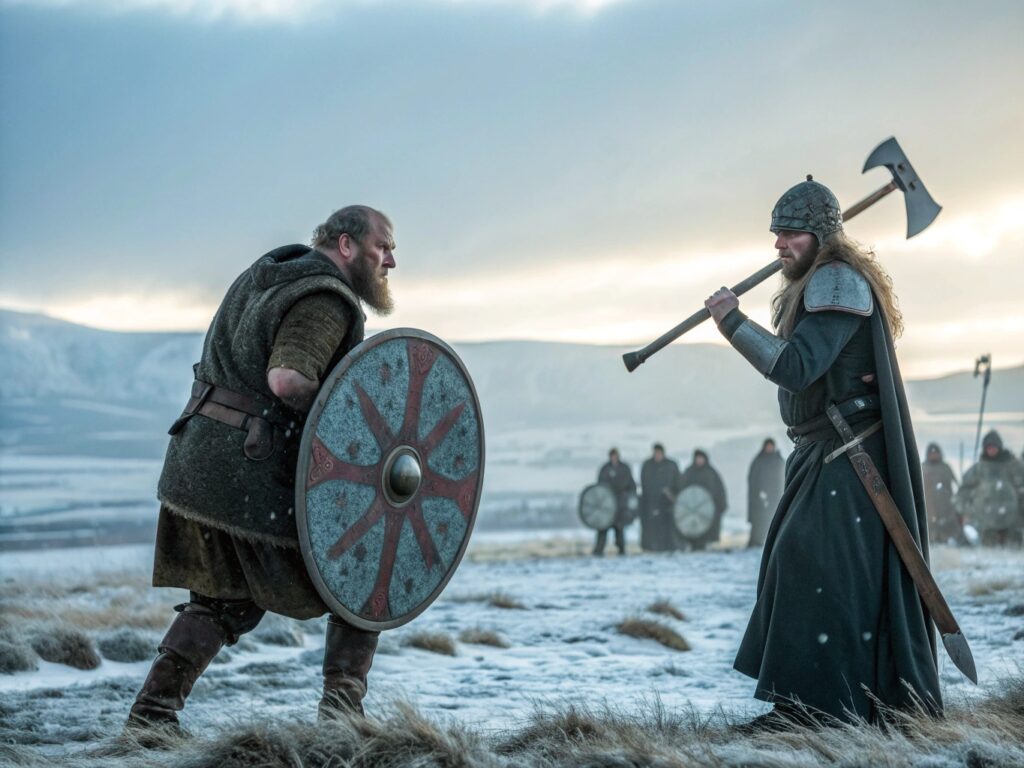
To the Vikings, law and order were not abstract institutions managed by kings or courts. They were rooted in family, kinship, and the unshakable principle of honor. When disputes arose, the Viking justice system relied on families to defend their rights and uphold their reputations. This often led to Viking blood feuds—long cycles of vengeance and compensation that shaped society as much as they threatened it.
In Norse culture, family honor was sacred. To leave an offense unanswered was to accept shame not just as an individual but as an entire clan. This article explores why blood disputes in Norse culture were so central, how they were managed, and how they defined the very structure of Viking law.
Kinship and Collective Responsibility
In Viking society, individuals were never isolated. Every person was part of a kin group, bound by loyalty and obligation. When one member committed a crime or suffered an injury, the entire family shared responsibility.
This principle of kinship and Viking law meant that disputes quickly escalated into family affairs. If a man was killed, his relatives were expected to avenge him. If a theft occurred, it was the family’s duty to demand restitution. Failing to act meant dishonor, and dishonor was a stain that could linger for generations.
Thus, family honor in Viking society was not a private matter—it was the foundation of justice.
The Nature of Viking Blood Feuds
Viking blood feuds were more than personal vendettas. They were structured conflicts governed by tradition and expectation. Feuds could last decades, drawing in multiple generations.
The Norse feud traditions demanded that blood be answered with blood—or with silver. If compensation (known as wergild, or “man-price”) was paid and accepted, peace could be restored. But if compensation was rejected or not offered, violence followed.
In this way, feuds acted as both punishment and deterrent, reminding society that no act went unchallenged.
Honor, Shame, and Vengeance
At the heart of every feud was family honor. In Viking culture, reputation determined power. A dishonored family could lose alliances, wealth, and standing at assemblies. To allow an injury to go unanswered was to accept weakness, something no proud Viking clan would tolerate.
Viking feuds and revenge were not only about retribution—they were about restoring balance. The act of vengeance wiped away shame, showing the world that honor was defended. Mothers encouraged sons to avenge fathers, brothers defended sisters, and entire clans rallied to protect their names.
This relentless pursuit of honor explains why feuds were so deeply embedded in the Viking justice system.
The Role of Wergild: Blood Price or Peace?
To prevent endless cycles of violence, Viking law introduced the concept of wergild. This was a system of compensation where killers or their families could pay a set value in silver, livestock, or goods to the victim’s kin. The amount depended on social status—killing a chieftain carried a higher wergild than killing a freeman.
If the victim’s family accepted the payment, the feud ended peacefully. If not, vengeance continued. In practice, Viking law and compensation balanced justice and pragmatism, allowing families to protect honor without endless bloodshed.
Still, the acceptance of wergild often depended on pride. Some families viewed payment as weakness, choosing vengeance instead.
Feuds in the Sagas
The Icelandic sagas are filled with accounts of blood feuds, illustrating how they shaped society. In Njál’s Saga, a series of killings spirals into generations of conflict, consuming entire families. Each act of vengeance is justified by honor, yet each one escalates the cycle further.
These sagas reveal that vengeance in Viking sagas was not random cruelty—it was a moral duty. Heroes were praised for avenging kin, while cowards were condemned for failing to defend family honor.
Through these stories, we see how blood disputes in Norse culture were woven into the very identity of the people.
Legal Assemblies and Public Justice
While feuds dominated private justice, public institutions also played a role. The Thing, a Viking legal assembly, served as a court where disputes were brought before community leaders. Families could argue cases, present witnesses, and negotiate settlements.
Yet even here, kinship and Viking law remained central. A man’s ability to win a case depended on the support of his family and allies. Law was not impartial—it was a reflection of social networks and collective responsibility.
Thus, the Viking legal system and kinship worked hand in hand, balancing vengeance with negotiation.
Women and Family Honor
Women played an important part in sustaining or fueling feuds. As mothers and wives, they were guardians of family honor in Viking society. They often reminded male relatives of their duty to avenge wrongs, sometimes even inciting feuds to protect reputation.
In the sagas, women are depicted shaming men who failed to act, pushing them toward vengeance. In this way, Viking women were active participants in the justice system, even if they rarely wielded weapons themselves.
The Dual Nature of Feuds
Feuds were destructive, but they also maintained order. Without centralized governments or standing armies, Norse society relied on Viking blood feuds as a way to enforce justice and deter crime. The threat of retaliation ensured that offenses were rare, while the possibility of wergild allowed peaceful resolution.
In this sense, feuds were not lawless chaos—they were the very Viking justice system, blending vengeance and law into one cultural framework.
Conclusion: Blood, Honor, and the Viking Way of Justice
The Vikings lived in a world where family honor was everything. Their justice system reflected this truth, relying on blood disputes in Norse culture to protect reputation and balance wrongs. Through vengeance, compensation, and kinship, they created a system that was both brutal and effective.
Though the cycles of Viking blood feuds often brought suffering, they also reinforced the values of loyalty, courage, and duty. To the Vikings, justice was not blind—it was personal, collective, and deeply tied to the honor of the family.
In the end, Viking feuds and revenge remind us that Norse society was built not only on exploration and conquest but also on the relentless defense of kinship and reputation.
