
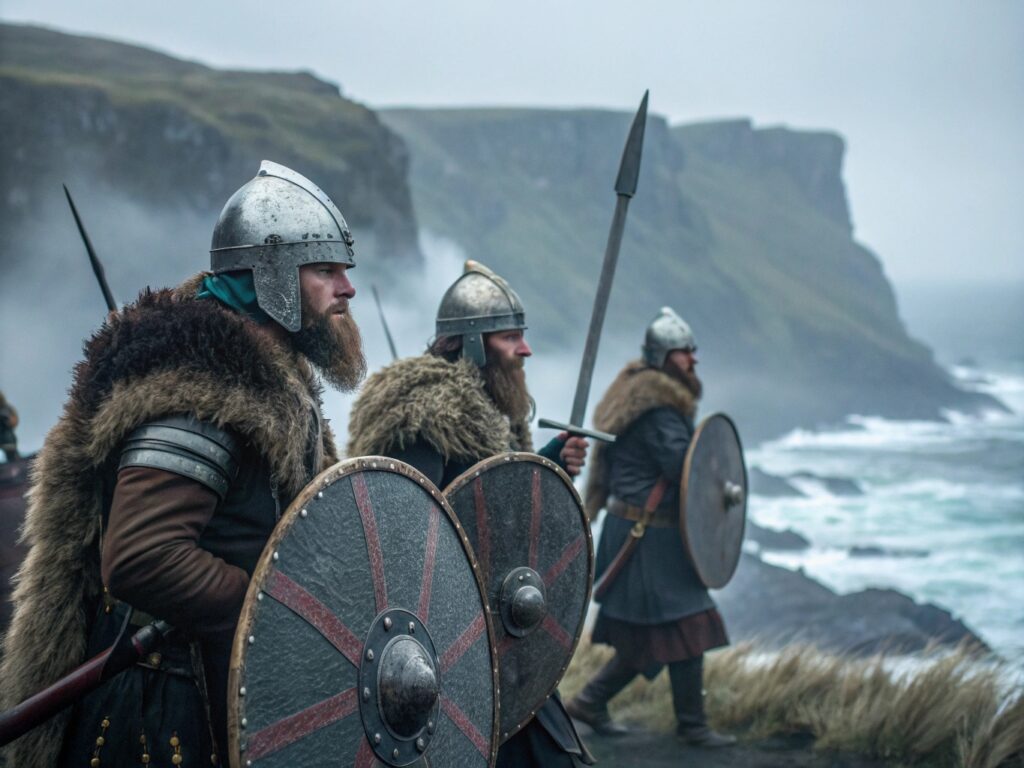
When most people hear the word Viking, they imagine fierce raiders in horned helmets (spoiler: they didn’t wear those), pillaging monasteries and burning villages. While this image holds some truth, it’s only a fragment of a far richer legacy. The Vikings were more than pirates of the north — they were explorers, traders, settlers, craftsmen, and political influencers.
Between the 8th and 11th centuries, the Viking Age reshaped the map of Europe. Through a unique mix of aggression, adaptation, and ambition, the Norse people altered the continent’s trade routes, cultural exchanges, military tactics, and even its genetic makeup. Their influence can still be felt today — in place names, languages, governance, and DNA.
Let’s explore how Vikings went from fearsome raiders to pivotal players in European transformation — and how they changed Europe forever.
The First Wave: Fear and Fire
The Viking Age began with a bang — or more accurately, with the thunder of oars and the crackling of fire. In 793 AD, Norsemen attacked the Christian monastery at Lindisfarne, off the northeast coast of England. It sent shockwaves through Europe.
To the Christian chroniclers, the Vikings were heathen invaders, “wolves among sheep.” Over the next decades, similar raids struck the British Isles, France, Ireland, and even parts of Spain and Italy. They targeted:
-
Monasteries (rich and poorly defended)
-
Coastal towns and villages
-
River settlements (reached via shallow-draft longships)
This period left deep scars — and deep fear — across Europe. But behind these acts of violence lay a deeper motivation: opportunity.
Why They Raided: More Than Greed
Yes, the Vikings raided for silver, slaves, and glory. But there were also push and pull factors that drove them:
-
Overpopulation in parts of Scandinavia meant limited farmland.
-
Political instability in Norse homelands made warrior bands seek fortunes abroad.
-
New navigation and shipbuilding skills gave them access to distant lands.
-
Demand for luxury goods in the north created incentive to trade — or take.
Raiding wasn’t just mindless violence. It was economic warfare, exploration, and social climbing wrapped in fur and steel.
Masters of the Sea: The Longship Advantage
What made the Viking impact so vast wasn’t just their courage — it was their technology.
The Viking longship was an engineering marvel:
-
Fast and narrow
-
Able to travel in open seas and shallow rivers
-
Easily carried over land if needed
This allowed Norsemen to appear anywhere, often without warning. From the Black Sea to the coasts of North America, the longship carried Vikings farther and faster than most of their contemporaries could imagine.
Their mastery of the sea let them raid, yes — but also trade, explore, and settle.
Trade Over Time: The Shift from Raiders to Merchants
As decades passed, many Viking groups transitioned from plunder to commerce. By the 9th and 10th centuries, trade had become a cornerstone of Norse expansion.
They exported:
-
Furs
-
Iron tools
-
Amber
-
Walrus ivory
-
Slaves (tragically, a major commodity)
And they imported:
-
Silk and spices from the East
-
Wine, glassware, and fine textiles from Europe
-
Silver coins, especially Islamic dirhams from the Abbasid Caliphate
Major Viking trade centers emerged:
-
Hedeby (modern Germany)
-
Birka (Sweden)
-
Dublin (Ireland)
-
Kyiv (Eastern Europe)
Far from mere marauders, Vikings became middlemen between East and West, connecting the Islamic world, the Byzantine Empire, and Christian Europe.
Eastward Expansion: The Rus and the Birth of Russia
Not all Vikings went west. Many traveled east, through modern-day Russia and Ukraine, navigating rivers like the Volga and Dnieper.
These Swedish Vikings (called Varangians):
-
Founded trading posts along key river routes
-
Interacted and intermarried with Slavic populations
-
Helped establish cities like Novgorod and Kiev
By the mid-9th century, a Varangian named Rurik established the Rurikid Dynasty, which would rule parts of Russia for centuries. His descendant, Oleg of Novgorod, went on to create Kievan Rus’, a powerful state that adopted Christianity under Prince Vladimir in 988 AD.
In fact, the very word “Russia” likely derives from Rus, a name used for the Norsemen.
6. The Norman Connection: From Vikings to Kings
In 911 AD, a Viking chieftain named Rollo was granted land by the King of France in exchange for protecting the region from other Norse raiders. That land became Normandy — literally, the “land of the Northmen.”
Rollo’s descendants, now French-speaking Christians, still carried Viking blood. And in 1066, his descendant William the Conqueror invaded England and won the Battle of Hastings, becoming King William I.
This was a seismic moment in English and European history. The Normans brought new governance, architecture, and military strategies — and all of it traced back to the Norse.
Cultural Exchange: Language, Law, and Life
Viking influence wasn’t just military or economic — it was cultural.
Language:
-
In England, many words of Norse origin entered Old English: sky, egg, knife, law, window, husband, Thursday (Thor’s Day), and more.
-
Place names like Grimsby, Derby, and Whitby all reflect Viking settlement.
Law and Custom:
-
In regions under Viking control (like the Danelaw in England), Norse legal customs merged with local systems.
-
Concepts of jury trial and local assemblies (things) spread through Europe.
Art and Mythology:
-
Norse decorative styles influenced European jewelry, weaponry, and church carvings.
-
Sagas and mythologies survived and influenced later literature — from Tolkien to Marvel.
Viking Settlements and Integration
Vikings didn’t just raid and leave. They settled — and in many places, they integrated.
-
In Ireland, they founded cities like Dublin and married into local clans.
-
In Scotland, Norse blood still runs strong in the Orkneys and Hebrides.
-
In Iceland, the settlers created a society governed by the Althing, one of the world’s oldest parliaments.
-
In England, Norse and Anglo-Saxon cultures blended — linguistically, socially, and genetically.
The Viking impact wasn’t one of erasure. It was fusion — often violent at first, but enduring and transformative.
Christianity and the End of the Viking Age
By the late 10th and early 11th centuries, most Norse regions had converted to Christianity — often by royal decree or foreign pressure. Kings like Harald Bluetooth in Denmark and Olaf Tryggvason in Norway pushed conversion hard.
This shift changed Viking society:
-
Raiding monasteries became less acceptable when your own people were building them.
-
Christian norms softened blood-feud culture.
-
Norse warriors were now Crusaders, not pagans.
The Viking Age didn’t end with a bang but a transformation. The Norse became part of Christian Europe — but they didn’t vanish. They evolved.
Legacy of the North: Vikings in the Modern World
The impact of the Vikings can still be felt across Europe — and beyond:
-
Genetic studies show Norse ancestry throughout Britain, Ireland, France, and parts of Eastern Europe.
-
Modern English owes a surprising amount to Old Norse.
-
Place names, traditions, and even folklore carry echoes of Norse roots.
-
The legal systems of Iceland and parts of Scandinavia reflect Norse assemblies and democratic practices.
-
Modern brands, sports teams, and pop culture revere Viking imagery — often simplified, but potent.
But beyond imagery, the true legacy lies in how Vikings connected worlds — through courage, exploration, conflict, and trade.
Conclusion: A Legacy Carved in More Than Stone
The Vikings were never just raiders. They were catalysts. Their longships brought not just destruction but also ideas, innovation, and integration.
They helped shape kingdoms, spread technologies, and connect distant regions through a mix of warfare and diplomacy. They brought the north into contact with the wider world — and changed that world in the process.
From Ireland to Russia, from Normandy to Byzantium, the Viking imprint remains — not as an echo of chaos, but as a complex, enduring legacy of transformation.
So the next time you hear “Viking,” think beyond the horned helmet. Think trade, travel, adaptation — and the bold reshaping of a continent.
