

A God of Waves and Fortune
In the world of Norse mythology, power was not only measured in battles or thunder. It also lived in the sea, in trade routes, and in the prosperity that flowed from them. Among the Vanir gods, one deity embodied these forces more than any other: Njord, god of the sea and wealth.
Sailors prayed to him before voyages, merchants invoked his blessings for fortune, and farmers saw his hand in bountiful harvests carried by favorable winds. Though less famous than Odin or Thor, Njord’s influence reveals the importance of seafaring and prosperity in Viking culture.
Njord in Norse Mythology
A Vanir God of Prosperity
Unlike Odin and Thor of the Aesir, Njord Norse god belonged to the Vanir, a group of deities associated with fertility, wealth, and the natural world. After the Aesir-Vanir war, Njord was given as a hostage to the Aesir to ensure peace. This exchange highlights how valuable he was: a god who embodied both maritime mastery and prosperity.
Njord God of the Sea and Wealth
Njord’s domains were vast:
-
The sea and winds, granting safe passage for sailors.
-
Fishing and harvests, ensuring abundance from waters and land.
-
Wealth and prosperity, blessing those who honored him.
For the seafaring Vikings, this combination was essential. Without Njord, trade, raids, and exploration across the seas would be perilous and unprofitable.
Njord’s Family: Father of Prosperity
Father of Frey and Freyja
Njord was also the father of Frey (god of fertility, harvest, and kingship) and Freyja (goddess of love, beauty, and magic). Together, this divine family represented fertility, prosperity, and abundance in every form.
A Symbol of Balance
As father of two of the most beloved Norse gods, Njord’s role was not only practical but symbolic. He embodied balance: between land and sea, war and peace, Aesir and Vanir.
Njord and Skadi: A Marriage of Ice and Waves
One of the most famous stories about Njord Norse mythology involves his marriage to the giantess Skadi, goddess of winter, hunting, and mountains. Their union was arranged after Skadi sought compensation for her father’s death at the hands of the gods.
The Compromise
Njord and Skadi agreed to live nine nights by the sea in Njord’s hall, Noatun, and nine nights in Skadi’s snowy mountains. But the compromise failed—Njord hated the howling wolves of the mountains, while Skadi despised the crying of seabirds.
This tale highlights not only Njord’s identity as a god of the sea and wealth, but also the difficulties of reconciling two very different worlds.
Njord’s Hall: Noatun
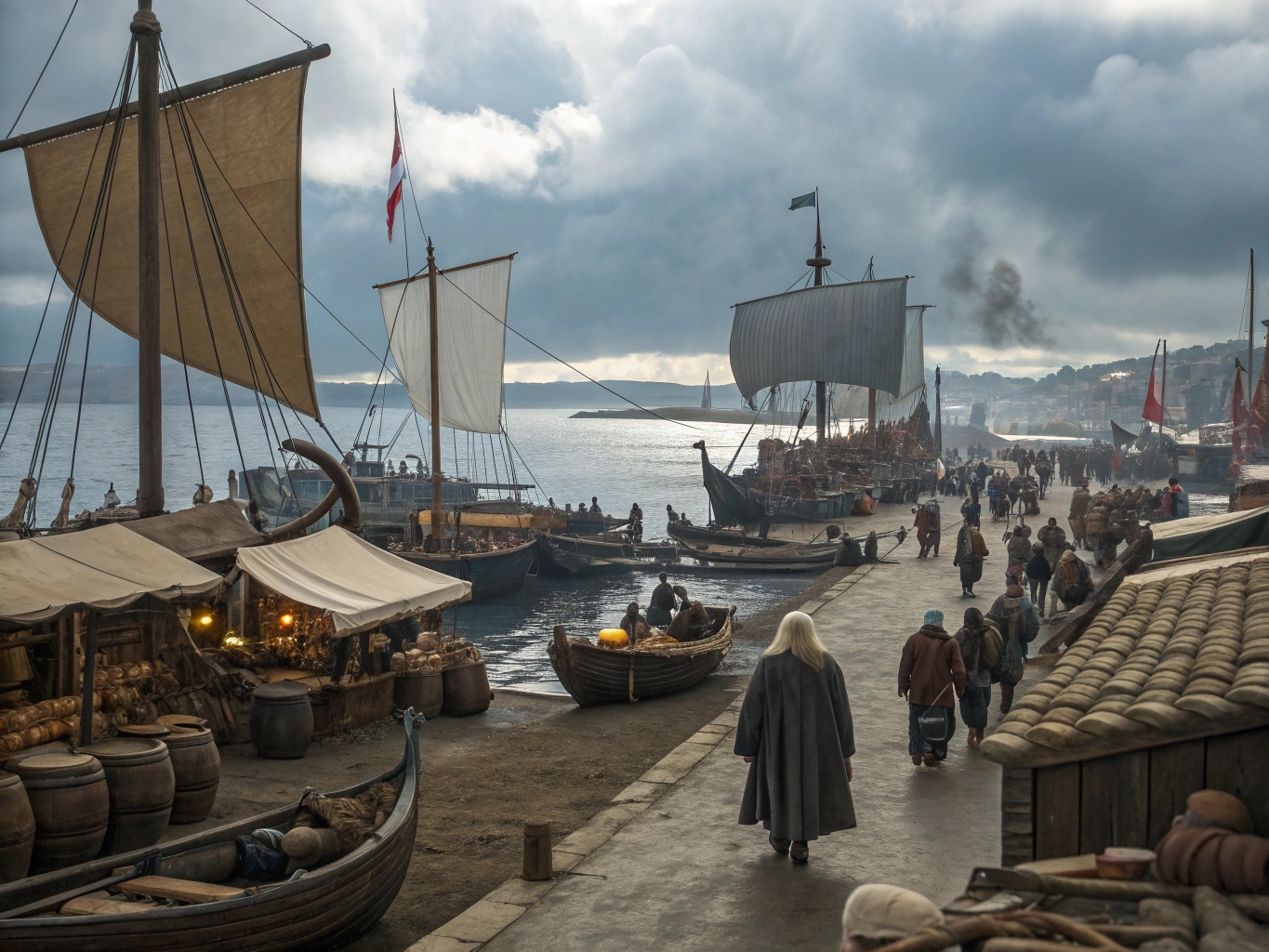
Njord’s home was Noatun (“ship-yard”), a hall by the sea. Here he blessed sailors and merchants, ensuring fair winds and safe journeys. Noatun symbolized his mastery over the seas and his role as protector of those who ventured into dangerous waters.
For Vikings, who relied on ships for everything from warfare to trade, Njord’s hall represented security and hope.
Njord and Viking Culture
Patron of Sailors and Traders
In Viking Age Scandinavia, where seafaring defined life, Njord god of the sea and wealth was crucial. He was invoked for:
-
Safe voyages during dangerous crossings.
-
Bountiful fishing, ensuring food for families and communities.
-
Trade success, bringing wealth from distant lands.
Symbol of Prosperity
While Thor protected warriors, Njord protected livelihoods. His blessings meant survival, growth, and prosperity for entire communities. In many ways, he was the quiet force behind the Viking expansion across Europe.
Njord in the Eddas and Lore
Njord in the Prose Edda
Snorri Sturluson’s Prose Edda describes Njord as wealthy and powerful, able to calm seas and extinguish fires. His ability to grant fortune and prosperity is emphasized, marking him as a god not only of survival but of success.
Njord’s Fate at Ragnarok
Unlike many gods, Njord is prophesied to survive Ragnarok, the great end of the world. This endurance reflects the eternal role of the sea and prosperity. Even after destruction, the forces Njord embodied—wealth, trade, and renewal—would remain.
Njord’s Symbolism: Wealth, Peace, and Balance
The Peaceful Vanir
As part of the Vanir gods, Njord symbolized prosperity through peace rather than war. He brought wealth not through conquest but through trade, abundance, and favorable winds.
Balance Between Worlds
Njord represented the balance between natural forces:
-
Sea and land (waves meeting shores).
-
Aesir and Vanir (reconciliation after war).
-
Chaos and prosperity (the danger of the sea balanced by wealth it provides).
The Forgotten but Essential God
Though not as glorified as Odin or Thor, Njord’s role was no less essential. Without prosperity, the gods and men alike would not survive.
Njord’s Influence Beyond Scandinavia
Norse Trade Networks
Viking trade routes stretched from the British Isles to Byzantium and even into the Islamic world. Merchants invoked Njord god of the sea and wealth for safety and fortune on these journeys. His influence extended across thousands of miles of coastline.
Survival in Folk Memory
While Njord faded after Christianization, his essence survived in Scandinavian folk traditions that honored the sea and its gifts. Even today, coastal communities carry echoes of his importance.
Njord in Modern Perspective
A God for Today
Njord speaks to modern audiences because he represents more than seafaring. He embodies:
-
Sustainability – living with and from the sea.
-
Prosperity through balance – wealth gained from fair trade, not exploitation.
-
Harmony between cultures – as seen in his role as a Vanir god living among the Aesir.
Legacy in Culture
Though often overshadowed by Thor or Loki in popular culture, Njord continues to appear in literature, art, and neopagan practices. For those drawn to the sea, he remains a symbol of fortune and safety.
Conclusion: From Waves to Prosperity
Njord Norse god, the god of the sea and wealth, reveals a side of Viking culture often overlooked: the pursuit of prosperity, peace, and survival. His blessings of safe voyages, abundant harvests, and successful trade were as vital as Thor’s battles or Odin’s wisdom.
Through his marriage to Skadi, his hall Noatun, and his children Frey and Freyja, Njord stands as a central figure in Norse mythology, embodying both natural forces and cultural values.
From waves to prosperity, Njord reminds us that behind every storm lies the possibility of abundance—and that true wealth comes not only from strength, but from harmony with the sea.
