
To the Vikings, death was not an end — it was a passage. A transition from the visible world to the unseen realm of spirits, gods, and ancestors. But this journey was not taken empty-handed. From the humblest farmer to the fiercest jarl, the dead were buried with grave goods: tools, weapons, jewelry, animals, ships — even sacrificed slaves.
These were not merely possessions. They were symbols, provisions, and clues to the soul’s journey in the afterlife. Viking burial goods tell a story not just of how the Norse lived — but how they believed the soul should be honored in death.
What Are Viking Grave Goods?
Viking grave goods refer to the items intentionally buried with the dead in Norse funerary practices. These could include:
-
Weapons (swords, axes, shields)
-
Tools (farming equipment, blacksmith tools)
-
Jewelry and beads
-
Cooking vessels, combs, and household items
-
Coins and silver hoards
-
Animals (dogs, horses, birds)
-
Boats (in elite burials)
-
Human sacrifices (rare, but significant)
The variety and richness of these goods often reflected social status, gender roles, and personal identity — but also, crucially, the Viking belief in the soul’s journey beyond death.
The Norse Soul: A Multifaceted Spirit
To understand Viking grave goods, we must first explore the Viking concept of the soul. Unlike the modern idea of a single, unified “spirit,” Norse spirituality believed the human soul had multiple parts, including:
-
Hugr – the mind or personal essence
-
Fylgja – a spirit animal or ancestral guide
-
Hamingja – a kind of luck or fate passed through family
-
Draugr – the restless spirit that could return if burial was dishonored
Grave goods, then, were not just gifts for the dead — they were tools for the hugr, offerings for the gods, and protection against the draugr. They ensured the soul moved peacefully to the next world, rather than haunting the living.
Weapons in Graves: Identity and Eternal Combat
Warrior graves are the most iconic. A Viking man might be buried with his sword, axe, shield, and spear — not just as status symbols, but as essential items for navigating the afterlife.
In Norse belief, warriors might enter Valhalla, where they would fight glorious battles by day and feast by night. Grave weapons ensured they arrived prepared for combat and worthy of Odin’s hall.
Interestingly, some female warrior graves have been found — such as the famous Birka grave in Sweden — challenging long-held assumptions about Viking gender roles and the spiritual significance of arms.
Tools, Keys, and Household Goods: Guardians of the Home
Women’s graves often included keys, spindles, jewelry, and cooking items — not as sexist markers, but as symbols of sacred domestic power.
Keys were especially important: they represented control over the household, the hearth, and by extension, the healing and spiritual center of Viking life. Burying a woman with keys wasn’t limiting her — it was honoring her role as guardian of family and fate.
Animals in Viking Burials: Companions and Guides
From horses and dogs to hawks and cattle, animal sacrifice in Viking graves was a profound statement. These creatures were not just companions in life — they were guides in death.
-
Horses carried the soul across realms
-
Dogs protected the dead from spirits or guided them
-
Birds (like hawks) connected the soul to higher worlds
These animals were seen as sacred carriers — often buried beside the body or ritually killed during the funeral. Their presence speaks volumes about the Norse bond between humans, nature, and the divine.

Ships and Burial Mounds: The Soul Sets Sail
In some elite burials, especially in Norway and Denmark, the dead were laid to rest in full-sized ships, surrounded by treasure, weapons, animals, and attendants. These include:
-
Oseberg Ship Burial (two noblewomen with textiles, sleds, animals, and a ship)
-
Gokstad Ship (a chieftain with weapons, shields, and sacrificed animals)
The ship symbolized the soul’s journey across water — a recurring image in Norse mythology. Whether sailing to Valhalla, Hel, or Fólkvangr, the ship was a vessel of honor and transformation.
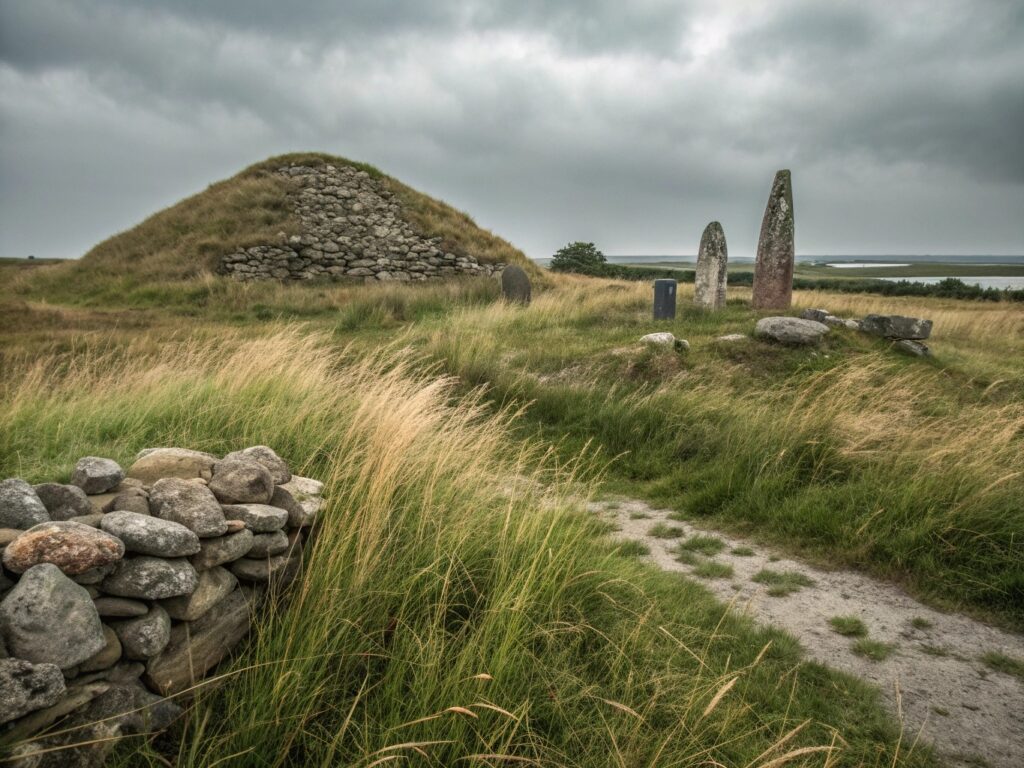
Burial mounds built over these ships acted like portals — anchoring the memory of the deceased while shielding the world from their possible return.
Grave Goods as Wards Against the Undead
Not all souls went peacefully. The Norse feared the draugr — reanimated corpses driven by greed, envy, or dishonor. Grave goods sometimes served to appease, bind, or neutralize these dangerous spirits.
Archaeologists have found:
-
Broken weapons placed deliberately to prevent their use by revenants
-
Stones or stakes pinning the body down
-
Severed heads or limbs to stop reanimation
These measures show a spiritual logic: the soul must be honored correctly or it would return as a threat to the living.
What Viking Grave Goods Reveal About the Soul
Every artifact tells a spiritual story. Together, Viking grave goods reveal that death was not passive — it was a continuation of identity, duty, and fate.
They show us that:
-
The afterlife was real and personal
-
The soul needed provisions for the next world
-
Honor in burial protected both the dead and the living
-
Material objects carried spiritual weight
In essence, Viking funerals were not about saying goodbye — they were about preparing the soul for its next battle, its next feast, or its eternal rest.
Conclusion: The Dead Do Not Travel Light
Burial, for the Vikings, was a sacred ritual. It honored the life lived, the soul departed, and the realm yet to come. Every sword laid beside a warrior, every bead clasped in a woman’s hand, every animal lowered into the earth — all of it spoke to a deeper truth:
The Norse did not fear death. They prepared for it.
And in doing so, they left us not only graves — but messages from the soul, written in iron, bone, wood, and fire.
