
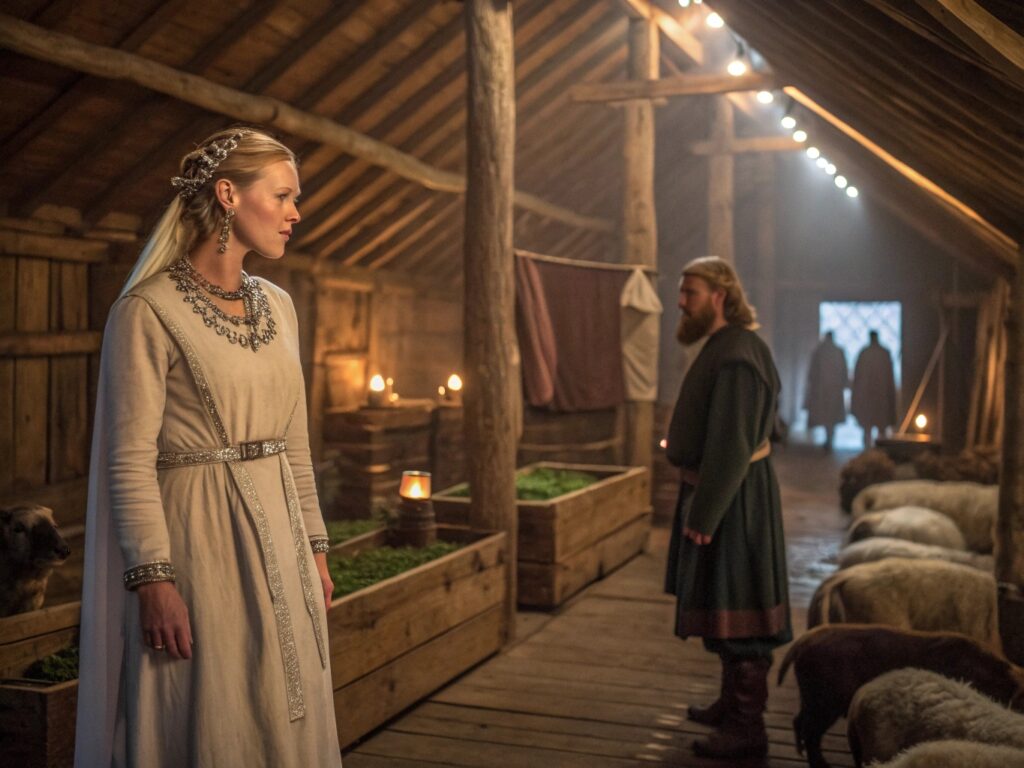
Marriage in the Viking Age was more than a union between two individuals—it was an alliance between families. Central to this arrangement was the Viking dowry, the wealth a bride brought with her into marriage. Far from being a simple gift, the dowry symbolized status, secured alliances, and offered women legal protection within a patriarchal society. To understand Viking marriage, one must explore Norse dowry customs, what they included, and how they shaped family and community life.
Marriage as an Alliance of Families
In Viking society, marriage was rarely about romantic love. Instead, it was a contract between two families, carefully negotiated to ensure mutual benefit. These unions strengthened political power, secured property, and maintained social stability.
The bride’s family played a crucial role in these negotiations. Fathers and brothers often arranged matches, balancing considerations of wealth, land, and honor. A marriage without a dowry would have been unusual, as it was the dowry that transformed the bride into a respected wife with standing in her new household.
What Was a Viking Dowry?
A Viking dowry (heimanfylgja, “what follows the bride from home”) consisted of the property and wealth a woman brought to her marriage. Unlike modern conceptions, dowries were not one-sided gifts to the husband—they remained legally tied to the wife. If the marriage ended in divorce, the dowry could be reclaimed.
Dowries in Norse culture typically included:
-
Land or farms – the most valuable assets, ensuring stability.
-
Livestock – cattle, sheep, and goats symbolized wealth and survival.
-
Textiles and clothing – fine wool, linen, and embroidered garments represented both skill and prosperity.
-
Jewelry and silver – portable wealth, often given as gifts or used in trade.
-
Slaves or servants – in wealthy families, individuals could be part of the bride’s dowry.
Each item reinforced the bride’s value and her family’s reputation, making the dowry a central feature of Viking marriage traditions.
Viking Brides and Their Household Power
A Viking bride’s dowry was more than wealth—it was her foundation of power in her new home. Women in Viking society held notable influence within the household. They managed property, directed servants, and ensured that food, clothing, and trade flowed smoothly.
Because the dowry remained legally tied to her, a woman could exercise economic agency. In some cases, she could reclaim her dowry if her husband mistreated her or if the marriage dissolved. This gave Norse women rights in marriage that surpassed those in many other medieval cultures.

Wedding Rituals and Dowry Exchange
Viking marriage rituals were both legal and ceremonial. Families gathered for feasts, contracts were witnessed, and gifts were exchanged. The groom’s family often provided a “bride price” (mundr), wealth given to the bride’s family as part of the agreement. The bride’s dowry balanced this exchange, creating a bond of reciprocity.
During the wedding feast, the bride and groom would often sit on high seats, symbolizing their new status. The presence of the dowry items—jewelry, livestock, or even land deeds—demonstrated to the community the seriousness of the union.
Thus, Viking wedding gifts and dowries worked as visible proof of alliance, ensuring both families recognized the legitimacy of the marriage.
Dowries, Divorce, and Women’s Rights
Unlike in many parts of medieval Europe, divorce was relatively common in Viking society. A woman could end a marriage for reasons such as abuse, neglect, or lack of support. When this happened, she was entitled to reclaim her dowry in full.
This system gave Viking women a level of independence and protection. A wealthy dowry could ensure her survival after divorce, while also discouraging mistreatment by her husband. In this way, dowries in Viking society functioned as a form of insurance for women, reinforcing their dignity and security.
Dowries as Political Tools
In aristocratic circles, dowries were not just household wealth—they were political weapons. Powerful families used marriages to secure alliances with neighboring chieftains or rival clans. A large dowry, such as fertile farmland or a hoard of silver, could tip the balance in negotiations.
Daughters became vital links in these strategies. Their Viking marriage customs were carefully planned to strengthen bonds, prevent feuds, and extend influence. In this sense, Viking brides carried the future of their clans with them, and their dowries symbolized the merging of power.
Social Status and the Size of Dowries
The value of a bride’s dowry reflected her family’s social standing. Wealthy families might send daughters with farms, ships, or slaves, while poorer families offered textiles, livestock, or tools.
However, every dowry, no matter its size, had meaning. Even a modest dowry secured a woman’s place in her husband’s household and guaranteed that she was not without resources. This reinforced the role of women in Viking households as respected managers of wealth and property.
Dowries in the Sagas and Archaeology
Both the sagas and archaeology give us glimpses of Norse dowry customs. In the Laxdæla Saga, dowries are mentioned as crucial in arranging marriages and settling disputes. In archaeological finds, richly furnished female graves often contain jewelry, weaving tools, and household items, suggesting the symbolic link between women, property, and family prosperity.
These sources confirm that dowries were not just material wealth—they carried cultural and symbolic weight.
The Truth About Norse Dowries
So, what did a Viking bride bring to her marriage? She brought wealth, skill, and the foundation of her future independence. Her dowry was more than a transfer of goods—it was a symbol of alliance, a form of insurance, and a reflection of her family’s honor.
Viking dowries reveal a society where women, though bound by patriarchal structures, retained significant rights and protections. Through dowries, Norse family alliances were sealed, wealth was shared, and women secured their position in households that depended on their labor and management.
Conclusion: Threads of Wealth and Honor
The truth about Norse dowries lies in their dual role as both practical wealth and symbolic power. They ensured that marriages were balanced contracts, that women retained dignity and rights, and that families could extend their influence across generations.
For the Vikings, where honor and survival were everything, a bride’s dowry was not just a chest of goods—it was the woven thread that bound families together in blood, bond, and destiny.
