
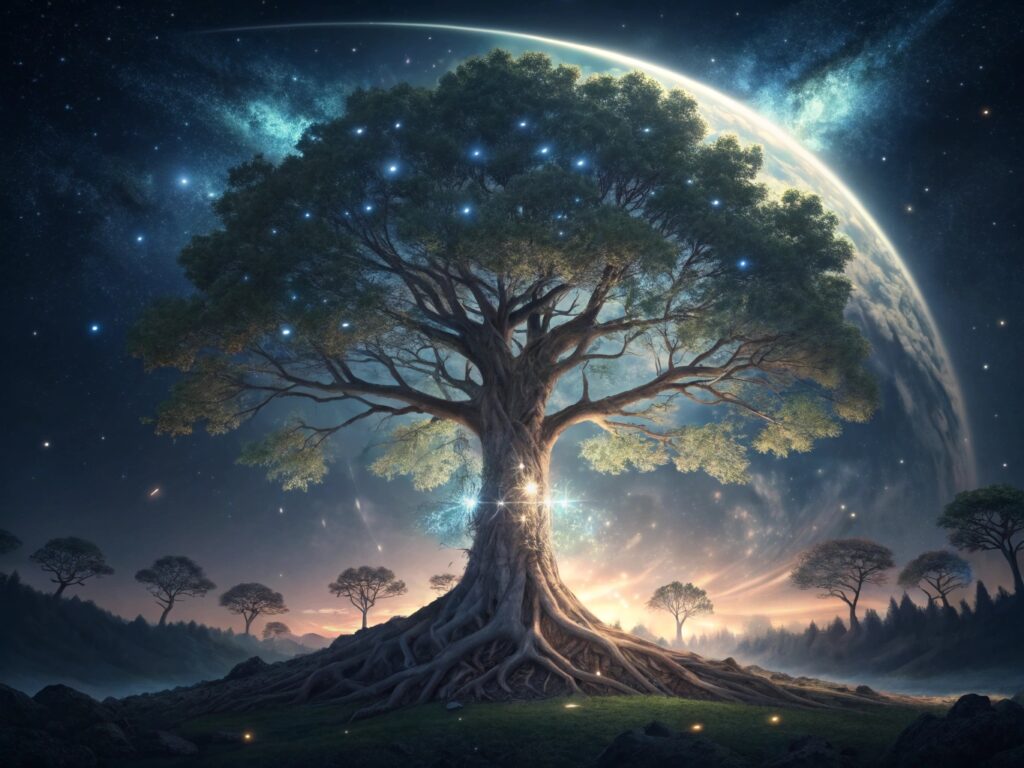
The World Tree and the Balance of Creation
In the heart of Norse mythology stands Yggdrasil, the mighty world tree that connects gods, giants, men, and spirits across the cosmos. Far more than a symbol of nature, Yggdrasil represented the foundation of cosmic order in Norse mythology. Its branches reached the heavens, its roots stretched into the underworld, and every creature and god depended on its health for survival.
This article explores how Yggdrasil functioned as the axis of existence, how the gods interacted with it, and why the world tree was central to understanding balance, fate, and the future in the Viking worldview.
Yggdrasil: The Axis of the Norse Cosmos
The Structure of the World Tree
According to the Poetic Edda and Prose Edda, Yggdrasil was an immense ash tree that bound together the nine realms of existence. These realms included:
-
Asgard – home of the Aesir gods
-
Midgard – the world of men
-
Jotunheim – land of the giants
-
Niflheim – realm of ice and cold
-
Muspelheim – realm of fire
-
Vanaheim – home of the Vanir gods
-
Alfheim – world of the light elves
-
Svartalfheim – realm of the dwarves
-
Helheim – underworld of the dead
Each realm was connected by Yggdrasil’s roots and branches, showing how the tree represented the entire structure of creation. In this way, Yggdrasil was more than a tree—it was the embodiment of cosmic order in Norse mythology.
The Roots and Wells of Yggdrasil
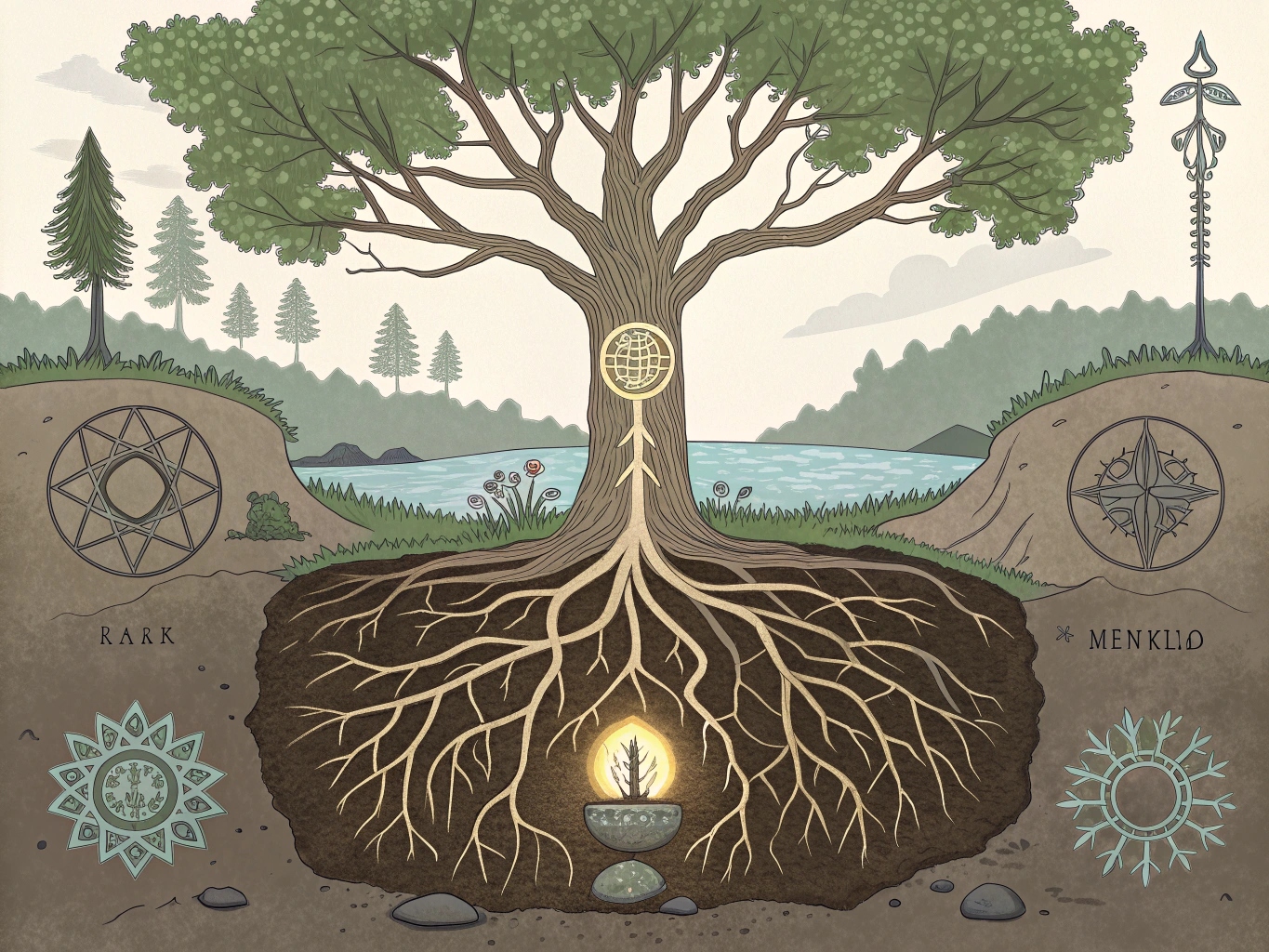
Beneath Yggdrasil stretched three great roots, each reaching into a different realm, nourished by sacred wells.
-
Urdarbrunnr (Well of Fate) – At this root dwelled the Norns, who wove the destiny of gods and men.
-
Mímisbrunnr (Well of Wisdom) – Here, Odin sacrificed an eye for knowledge of the cosmos.
-
Hvergelmir – A spring in Niflheim from which many rivers flowed, guarded by the dragon Nidhogg.
These wells symbolized the foundations of existence: fate, wisdom, and primal chaos. Together they fed the tree and upheld the balance of the universe.
The Gods Within Yggdrasil
Odin and the Tree of Knowledge
Perhaps the most famous story connected to Yggdrasil is Odin’s sacrifice. To gain knowledge of the runes, Odin hung himself on Yggdrasil for nine nights, wounded by his own spear. Through this act, Odin aligned himself with the tree, seeking insight into the mysteries of fate and the cosmic order of Norse mythology.
Thor and the Guardianship of Order
Thor, protector of gods and men, also played a role in maintaining balance. By defending Asgard and Midgard from giants, he helped preserve the order that Yggdrasil embodied. His battles reflected the constant struggle to maintain harmony in the face of chaos.
The Norns: Weavers of Fate
At the roots of Yggdrasil sat the Norns—Urd (past), Verdandi (present), and Skuld (future). These three beings carved runes into the tree, weaving the destiny of all existence. Their work reinforced the idea that cosmic order in Norse mythology was both structured and unyielding, governed by forces even the gods could not escape.
Creatures of the World Tree
Yggdrasil was alive not only with gods but with symbolic creatures that represented the tension between creation and destruction:
-
Nidhogg – A dragon gnawing at Yggdrasil’s roots, symbolizing decay and the forces of chaos.
-
Eagle – Sitting at the top of the tree, symbolizing wisdom and vision.
-
Ratatoskr – A mischievous squirrel running up and down the tree, spreading gossip between the eagle and Nidhogg, representing conflict and miscommunication.
-
Stags – Four deer that nibbled at the branches, symbolizing consumption and the passage of time.
These creatures illustrated the fragile balance of life: while the tree upheld the cosmos, it was constantly threatened.
Yggdrasil and the Cosmic Order in Norse Mythology
The cosmic order of Norse mythology was not static—it was dynamic, full of tension. Yggdrasil embodied this balance between growth and decay, life and death, order and chaos.
-
Its roots connected wisdom, fate, and primal energy.
-
Its branches stretched to all realms, binding gods, humans, and spirits.
-
Its survival ensured the survival of the cosmos.
In this way, Yggdrasil was both the symbol and the mechanism of universal order. Without it, everything would collapse into chaos.
Yggdrasil at Ragnarok: The Fate of the World Tree
Norse mythology prophesied that at Ragnarok, Yggdrasil would tremble. The tree itself would not be destroyed, but it would shake violently as the cosmos faced destruction.
-
Giants would storm Asgard.
-
Thor would face Jormungandr.
-
Odin would battle Fenrir.
-
The world would burn and sink into the sea.
Yet from the remains, Yggdrasil would help bring forth renewal. Two humans, Lif and Lifthrasir, would survive, sheltered within the tree, ensuring life continued.
This cycle emphasized a key feature of the cosmic order in Norse mythology: destruction was not the end, but a stage in the eternal cycle of renewal.
Symbolism of Yggdrasil in Viking Culture
Axis Mundi: The Center of Existence
Like many cultures, the Norse saw the cosmos centered on a sacred tree. Yggdrasil functioned as the axis mundi, the point around which everything revolved. This universal structure anchored their worldview.
Connection Between Worlds
For Vikings, Yggdrasil symbolized the interconnection of life. The realms were not isolated—they were branches of the same tree. Actions in one realm rippled through others, showing the interdependence of gods, men, and spirits.
Order vs. Chaos
Yggdrasil reflected the Viking understanding that life was fragile. Just as the tree was constantly gnawed at by creatures of destruction, so too was the world constantly under threat. To maintain order required vigilance, courage, and sacrifice.
Modern Relevance: Why Yggdrasil Still Matters
Today, Yggdrasil remains a powerful symbol, appearing in literature, art, and popular culture. Its message resonates because it speaks to universal truths:
-
All life is connected.
-
Order requires balance with chaos.
-
Renewal follows destruction.
In modern times of uncertainty, the lessons of cosmic order in Norse mythology remind us of resilience, interconnection, and the cycles of life.
Conclusion: The Eternal Tree of Balance
Yggdrasil is more than myth—it is the embodiment of cosmic order in Norse mythology. It connects the nine realms, sustains the gods, holds the threads of fate, and survives even Ragnarok.
For the Norse, Yggdrasil was not just a tree—it was life itself, the balance between chaos and order, and the guarantee that existence would continue.
Its roots remind us of wisdom and fate, its branches of connection and interdependence, and its endurance of the eternal cycles of creation. Even today, Yggdrasil stands as a timeless symbol of resilience, reminding us that though the world may tremble, life endures.
