
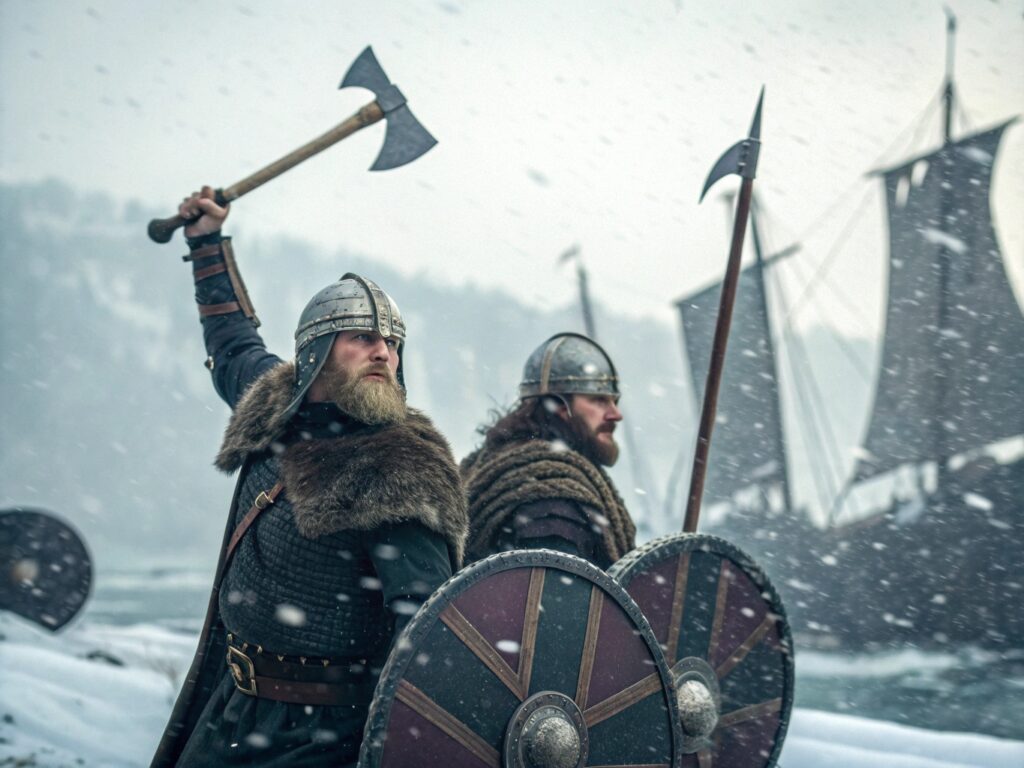
For the Vikings, kinship was destiny. A man’s honor, reputation, and survival were tied to his family, and among these ties, none carried greater weight than the bond between brothers. Whether standing side by side in combat or locked in deadly rivalry, Viking brothers shaped the stories of the Norse world. The sibling bonds in Viking sagas reveal how loyalty, betrayal, and blood shaped both families and entire societies.
This article explores how sagas portray brothers in Viking battles, how Viking rivalries tore families apart, and why sibling ties were both the foundation and the undoing of Viking honor.
Brotherhood and the Viking Ideal
The concept of brotherhood went beyond blood—it represented strength, loyalty, and the unity needed to survive in a violent age. Brothers in Viking society were expected to defend one another, uphold family honor, and protect shared property.
In sagas, loyal brothers often fought as one, embodying the warrior ideal of standing shield-to-shield. Their unity was not just practical—it was symbolic of family ties in Norse culture, where kinship determined alliances, vengeance, and social standing.
When brothers stood together, they became an unbreakable force, feared by enemies and admired by allies.
Sibling Loyalty in the Sagas
The Icelandic sagas are filled with examples of sibling loyalty. In Egil’s Saga, Egil and his brother Thorolf fight side by side in numerous battles, each relying on the other’s strength. Their bond exemplifies sibling loyalty in Viking society, where trust among brothers could mean the difference between life and death.
These stories celebrated the Viking ideal of warrior brotherhood, where courage was amplified through kinship. Brothers who fought together not only secured victory but also preserved the reputation of their families.
Rivalries and Betrayal
Yet not all sagas praise unity. Just as often, they recount tales of bitter Viking rivalries between brothers. Disputes over inheritance, marriage alliances, or honor could drive brothers into deadly conflict.
In The Saga of the Ynglings, fraternal strife leads to betrayal and murder, illustrating how sibling relationships in Norse culture could fracture under pressure. Feuds between brothers were particularly tragic because they pitted family honor against family loyalty.
Such rivalries often spiraled into wider conflicts, drawing in entire clans and igniting Viking blood feuds between brothers that lasted generations.
The Role of Family Honor
Whether united or divided, brothers in Viking sagas were bound by family honor. If one brother was insulted or harmed, the other was expected to act. To fail in this duty meant shame not only for the individual but for the entire family.
This responsibility could strengthen sibling bonds, but it could also strain them. When two brothers disagreed on how to defend honor—whether through vengeance, settlement, or restraint—conflict arose. In this way, Viking family honor and kinship were both glue and fault line, holding brothers together while sometimes tearing them apart.
Brothers in Battle
On the battlefield, brothers in Viking battles stood side by side in the shield wall, their loyalty tested under fire. Saga descriptions emphasize how brothers shared weapons, defended each other’s flanks, and inspired one another’s courage.
To die with one’s brother in battle was considered a noble fate, ensuring that family honor was preserved. To abandon a brother, however, was the greatest shame. In sagas, cowardly siblings are remembered with scorn, while loyal brothers are immortalized in poetry and song.
Brothers as Rivals for Power
Beyond personal disputes, brothers also clashed over leadership and kingship. In the Viking Age, inheritance was rarely straightforward, and competing claims often set siblings against one another.
Historical records, like those of Harald Fairhair’s descendants, show how rival brothers fought for crowns and kingdoms. These conflicts, mirrored in the sagas, highlight how Viking rivalries were not only personal but political.
For families of power, brothers could be both greatest allies and most dangerous enemies.
Brotherhood Beyond Blood
The concept of brotherhood in Norse culture extended beyond family ties. Warriors often referred to one another as “battle brothers,” forging bonds as strong as blood through shared struggle.
Yet even here, sagas often contrast chosen brotherhood with actual kinship. A man might trust a comrade more than his own sibling if family rivalries poisoned their bond. This contrast deepens our understanding of Viking saga rivalries—kinship could inspire both loyalty and betrayal, sometimes in the same family.
The Tragedy of Sibling Feuds
The most powerful saga stories about brothers are also the most tragic. Tales of brothers forced into conflict by circumstance or pride underscore the tension between loyalty to kin and personal ambition.
Such feuds remind us that Viking family disputes were not mere stories of violence—they were moral dramas. By portraying brothers as both heroes and rivals, sagas highlighted the fragile balance of kinship in Norse society.
Lessons from the Sagas
The recurring theme of sibling bonds in Viking sagas teaches us that kinship was the backbone of Viking life. Brothers were expected to protect one another, avenge dishonor, and uphold the family’s reputation. Yet when ambition, greed, or betrayal entered the picture, these same bonds could become deadly.
Through these tales, Viking society reinforced its values: loyalty, honor, and the price of betrayal. Brothers were mirrors of each other, and their choices determined not only their fates but the fate of their families.
Conclusion: The Double-Edged Sword of Brotherhood
In Viking culture, brotherhood was both shield and sword. Viking brothers could stand united, their bond forming an unbreakable shield wall, or they could turn against each other, igniting feuds that consumed generations.
The sagas immortalize these stories because they reflect the very heart of family ties in Norse culture—loyalty and rivalry intertwined. In a world where honor defined destiny, the actions of brothers carried immense weight.
Ultimately, the sagas remind us that the Viking ideal of kinship was not simple unity but a complex, fragile balance. Brothers could be each other’s salvation—or their downfall.
