
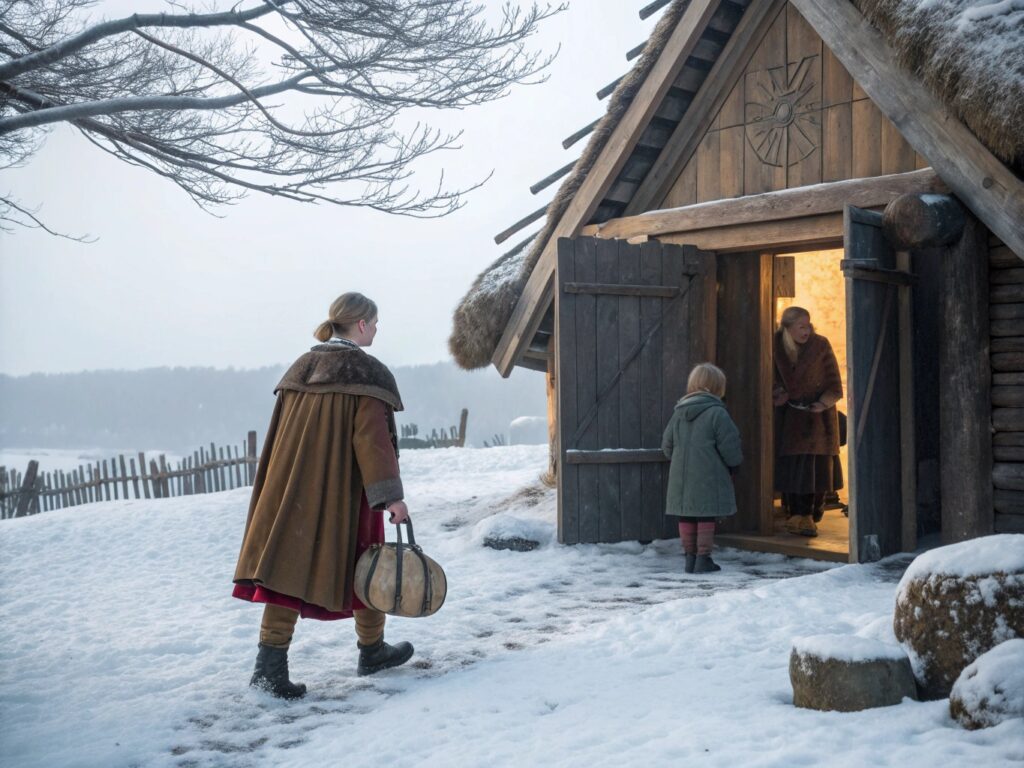
In the Viking Age, family was everything—but kinship extended far beyond the walls of the longhouse. One of the most fascinating practices in Norse culture was fosterage, the tradition of sending children to be raised by another household. At first glance, it may seem like a form of abandonment, but in truth, it was a powerful tool for strengthening alliances, training the young, and shaping the social fabric of Viking society.
This article explores how Viking fosterage worked, why families participated in it, what it meant for children, and how it is remembered in the Viking sagas.
What Was Viking Fosterage?
Fosterage in Norse culture was the practice of placing a child—often around the ages of 5 to 10—into the care of another family. The arrangement was voluntary and based on mutual trust and obligation. While parents remained important, the child’s daily upbringing, education, and training were overseen by foster parents.
Unlike slavery, fosterage was an honor. A family entrusted their child to another household not because of weakness but because of the strength of kinship ties. To foster a child was to form a bond that rivaled blood itself.
Kinship and Political Alliances
At its core, Viking fosterage was about creating alliances. By entrusting children to another family, kin groups bound themselves together in loyalty and obligation. These bonds extended beyond simple friendship—they became sacred ties.
If one foster family suffered insult or injury, the other was honor-bound to defend them. This expanded the network of protection and influence in a society where survival depended on loyalty. For chieftains, fostering was a political tool, weaving alliances across clans and regions.
Thus, Norse foster families were not only raising children—they were building the very foundation of Viking politics.
Foster Brothers and Sisters
One of the most enduring legacies of fosterage was the creation of foster brothers and sisters. These relationships often became as strong, or stronger, than blood ties.
The sagas describe foster brothers fighting side by side in battle, bound by loyalty that was unshakable. Betrayal between foster siblings was considered one of the greatest crimes in Viking society. Such relationships were so important that they often outlived even blood feuds, reminding us how deeply Viking kinship and fosterage shaped honor and duty.
Training and Education in Foster Homes
Fosterage was not just about politics—it was also about education. Viking child-rearing traditions focused on practical skills, and fosterage ensured that children learned from the best.
-
Boys fostered into warrior families learned combat, seamanship, farming, and leadership.
-
Girls fostered into skilled households mastered weaving, textile work, food preparation, and property management.
In addition, both boys and girls absorbed oral traditions, sagas, and myths that shaped their identity. A child’s upbringing in Viking society was thus enriched by new skills, experiences, and values gained outside their birth home.
Fosterage and Family Honor
Entrusting a child to another household was an act of immense trust. If the foster family mistreated the child, it was seen as an insult to the biological family’s honor. Conversely, if the child thrived, both families shared prestige.
This link between Viking family honor and loyalty made fosterage an integral part of society. By raising another family’s child well, one household gained reputation for generosity and strength. The child, in turn, became a living bond between two clans.
Fosterage in the Sagas
The Icelandic sagas vividly describe fosterage arrangements. In Njál’s Saga, for example, foster relationships play a key role in shaping alliances and conflicts. Foster brothers stand by one another in battle, and their loyalty often determines the outcome of feuds.
These stories reveal how fosterage in Viking sagas was not merely background detail—it was central to the plot, highlighting how important the tradition was in real life. The sagas immortalized fosterage as both a social and emotional force that shaped destinies.
Children’s Perspective
For children, fosterage was both challenge and opportunity. Leaving one’s home could be daunting, but it offered new horizons. Children learned resilience, adaptability, and loyalty in households that treated them as their own.
Fostered children often held a unique status—they belonged to two families at once. This dual identity gave them more opportunities for marriage, alliances, and influence. Through Viking upbringing practices, fostered children became bridges between communities.
Fosterage and Viking Justice
Fosterage also played a role in law. If a foster child was harmed, both the biological and foster families were bound to seek justice. This amplified the child’s protection, as two households now had vested interest in defending them.
Such arrangements reinforced Viking justice, where kinship determined responsibility. A foster child’s honor was tied to multiple families, strengthening the network of accountability.
Decline of Fosterage
As Norse society shifted with the spread of Christianity and centralized kingship, Viking fosterage gradually declined. The emphasis on church-run education and more formalized legal systems reduced the need for fosterage as a political and social tool.
Yet, even as the practice waned, its memory endured in the sagas. Fosterage remained a cultural touchstone, remembered as a noble tradition of loyalty, education, and kinship.
Conclusion: Why Fosterage Mattered
In the Viking Age, children were not only heirs of blood but also symbols of alliance. Through fosterage in Norse culture, families extended their influence, secured loyalty, and strengthened the bonds of society.
Fosterage was about more than raising children—it was about weaving threads of honor, duty, and survival into the fabric of Norse life. Foster brothers and sisters became warriors and weavers of destiny, carrying forward the values of both their birth and foster families.
In the end, fosterage reminds us that the Vikings understood family not as something fixed, but as something that could be expanded, strengthened, and redefined through trust, loyalty, and shared responsibility.
