
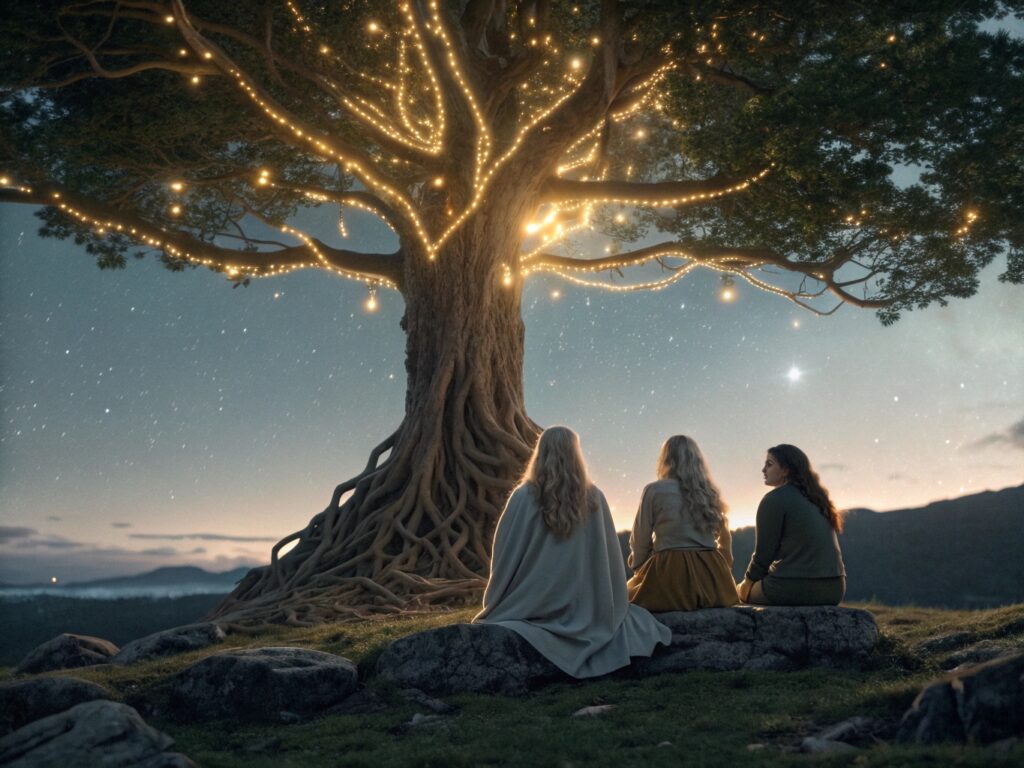
In the heart of Norse mythology, destiny was not a vague idea but a living force, woven and guarded by powerful beings known as the Norns. These mysterious figures, often described as fate weavers, shaped the lives of gods and mortals alike. The threads of destiny they spun at the base of Yggdrasil, the World Tree, determined the rise and fall of heroes, the outcome of battles, and even the fate of the cosmos itself. To the Vikings, who lived in a harsh and uncertain world, the Norns embodied the certainty that destiny could not be escaped.
This article explores who the Norns were, their connection to Yggdrasil, their role as Norse goddesses of fate, and how their power compares to other mythological fate weavers such as the Greek Moirai.
Who Were the Norns?
The Norns were a triad of supernatural women, each representing a different dimension of time:
-
Urd (Urðr) – the past
-
Verdandi (Verðandi) – the present
-
Skuld – the future
Together, they spun the tapestry of existence, ensuring that every being’s fate—from the mightiest god like Odin to the humblest peasant—was fixed within their design. Unlike the Christian idea of divine providence, the Norns did not act out of morality or judgment. They were impartial custodians of fate, working with the inevitable laws of time itself.
The Norns in Norse mythology reveal the Viking worldview: life was short, destiny was certain, and courage came from facing fate head-on rather than denying it.
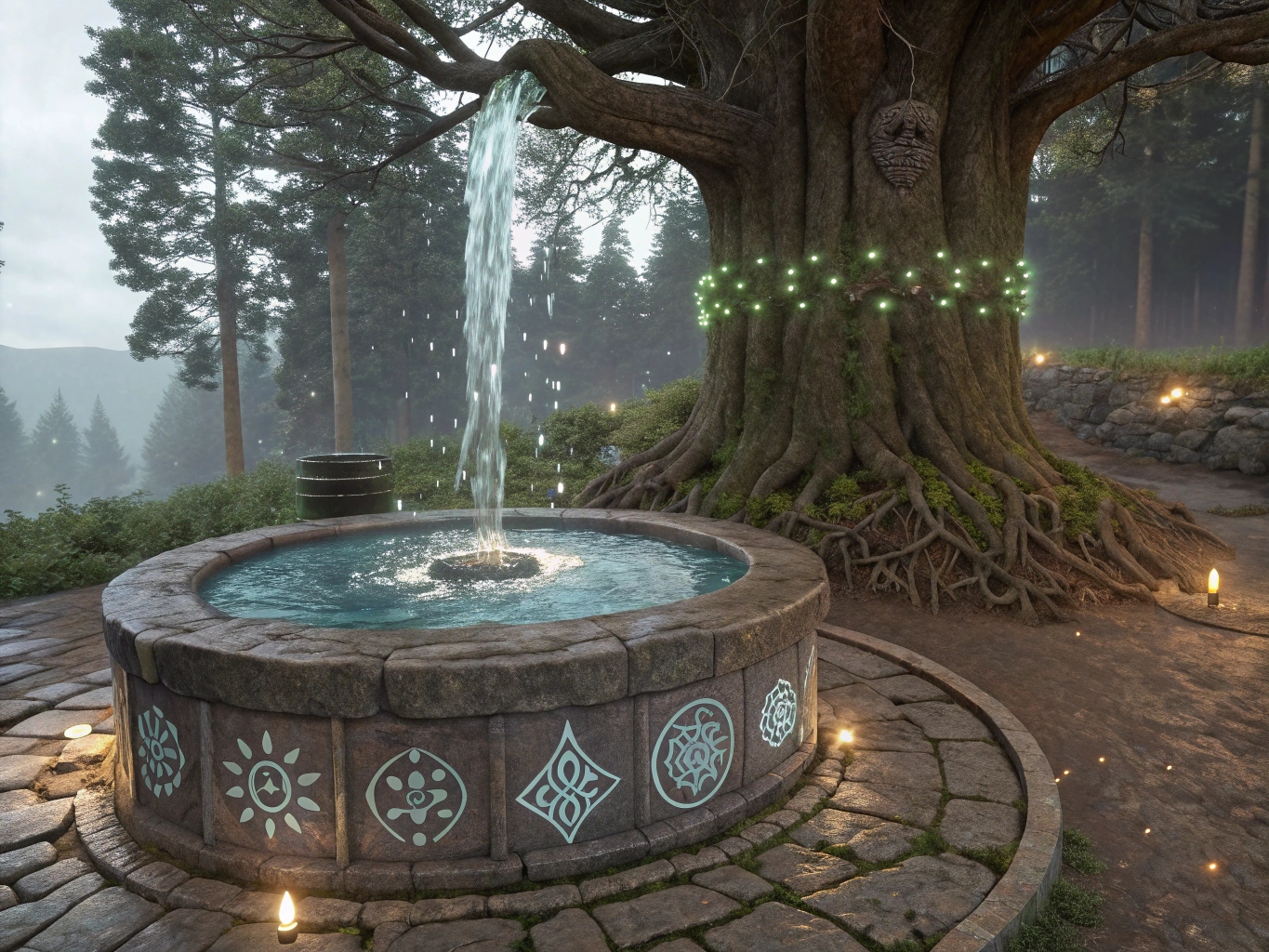
The Well of Urd and Yggdrasil
The threads of destiny were not woven in isolation. According to ancient sagas, the Norns worked at the Well of Urd, located at the base of Yggdrasil, the cosmic World Tree that connected all realms. This sacred well contained wisdom and mystery, its waters nourishing the tree that sustained existence.
The image of the Norns tending Yggdrasil—watering its roots, shaping fate, and weaving destiny—was central to Viking mythology. Yggdrasil symbolized the interconnectedness of all beings, while the Norns symbolized inevitability: even the tree itself would eventually fall when Ragnarök, the end of the world, arrived.
Fate and Destiny in Norse Belief
For the Vikings, fate was unavoidable. The phrase “Wyrd bið ful āræd”—“fate is inexorable”—captures this ancient mindset. Unlike modern interpretations of free will, Norse people believed that life unfolded along threads already spun. However, how one faced destiny mattered deeply.
A warrior who died bravely in battle would meet his fate with honor, gaining a place in Valhalla. A coward might live longer, but his threads of destiny would condemn him to disgrace. Thus, the Norns shaped destiny, but human choices defined legacy.
The Norse goddesses of fate reinforced this paradox: destiny could not be changed, but the meaning of destiny was forged by courage, sacrifice, and faith.
The Symbolism of Weaving
Weaving was more than craft in Norse culture—it was a metaphor for creation and destruction. The loom, with its warp and weft, mirrored the invisible design of the cosmos. Women were often associated with weaving in daily life, and the Norns elevated this act into the divine sphere.
The threads of destiny in Norse myths were fragile yet unbreakable. Once spun, they could not be undone. Skaldic poets often compared human life to cloth that would eventually wear thin, torn by time. This imagery resonated strongly with Vikings who depended on woven sails to navigate perilous seas and woven garments to survive icy winters.
Urd, Verdandi, and Skuld: The Triple Forces
Urd – The Weight of the Past
Urd represented what had already been. Her very name derives from “that which has happened.” In Norse mythology prophecy, Urd’s presence reminds us that the past is permanent—it cannot be changed, only remembered.
Verdandi – The Pulse of the Present
Verdandi’s name means “becoming” or “what is happening now.” She embodied the fleeting nature of life’s current moment. Vikings understood that the present was the only time they truly possessed, yet even it slipped into Urd’s realm with every heartbeat.
Skuld – The Mystery of the Future
Skuld, often linked to obligation or debt, symbolized the uncertain future. She was also connected to the Valkyries, who chose warriors destined to die in battle. In this way, Skuld was not just an observer of fate but an enforcer of it.
Together, these three fate weavers of Norse mythology embodied the flow of time—past, present, future—interwoven and inseparable.
The Norns and Prophecy
The Norns’ connection to prophecy reveals why they were both feared and revered. Unlike oracles in Greek tradition, the Norns did not speak directly to mortals. Instead, their weaving itself was prophecy. Seers, known as völvas, sometimes glimpsed the patterns of fate through trance and divination, but even they could not alter it.
The greatest prophecy in Viking lore—Ragnarök—was understood as inevitable because it was already written in the threads of destiny. The gods themselves, despite their power, could not escape what the Norns had spun.
The Norns vs. the Greek Fates
The Norns vs. Greek Fates comparison offers fascinating insight. Both mythologies feature three female figures who controlled destiny through weaving. The Greek Moirai—Clotho, Lachesis, and Atropos—spun, measured, and cut the thread of life. Like the Norns, they determined the lifespan of mortals.
Yet, a key difference lies in emphasis. The Moirai operated as agents of cosmic justice within a structured order overseen by Zeus, whereas the Norns stood beyond even Odin’s authority. In this sense, the Norns symbolized a more unyielding destiny, rooted in the inevitability of time rather than divine law.
Norse Fate in Viking Life
Belief in the Norns and the threads of destiny influenced Viking life profoundly. Warriors entered battle with the conviction that death was already written. This fatalistic courage made them formidable, for fear of death could not sway men who saw themselves as already living within their destined span.
Everyday people also honored fate in rituals and sagas. Birth rituals invoked the Norns to bless newborns with favorable destiny. Skalds wove references to the fate weavers of Norse mythology into poetry, ensuring their cultural presence remained strong.
Legacy of the Fate Weavers
The Norns remain a powerful symbol in modern storytelling. From fantasy novels to video games, the idea of fate as woven threads continues to fascinate audiences. Their imagery connects us to universal questions: Is our life predetermined? Do our choices matter? Can destiny ever be rewritten?
While modern readers may prefer to believe in free will, the Norns of Norse mythology remind us that acceptance of destiny can also bring strength. The Vikings faced an unpredictable world, yet their belief in fate gave them clarity: life was short, fate was unyielding, and honor mattered most.
Conclusion: The Threads That Bind Us
The story of the **Norns—Urd, Verdandi, and Skuld—**is not just a myth but a profound meditation on time and destiny. They sat by Yggdrasil’s roots, weaving with silent patience, unmoved by the cries of gods or men. Their craft showed that while we cannot escape the threads of destiny, we can choose how to walk upon them.
In the end, the Norns embody the eternal truth of the Norse worldview: the past is fixed, the present fleeting, and the future inevitable. What remains in our power is not to change fate, but to meet it with courage.
